
The Unsung Revolution of Cantaloupe Gazpacho
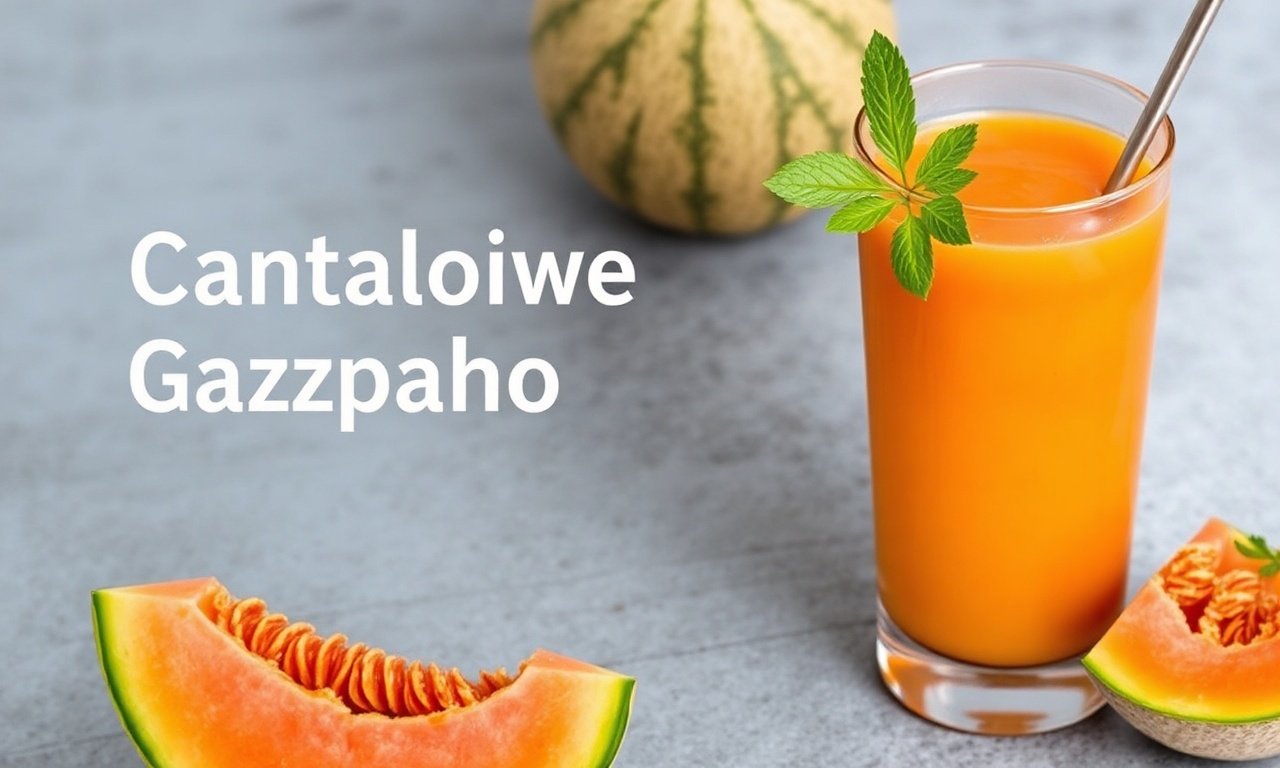
Forget everything you thought you knew about gazpacho. While tomato-based versions rightfully hold a revered place in summer culinary traditions, there exists a more nuanced, elegantly refreshing iteration that often gets overlooked: Cantaloupe Gazpacho. This isn’t merely a fruity twist on a classic; it’s a sophisticated exploration of flavor profiles, proof of the versatility of simple, peak-season ingredients, and a dish that consistently surprises those who dismiss it as overly sweet. My experience has shown that the true magic of a well-executed Cantaloupe Gazpacho lies in its delicate dance between natural sweetness and subtle savory undertones, a balance that can elevate it from a mere chilled soup to a sublime starter or light lunch.
- The Unsung Revolution of Cantaloupe Gazpacho
- The Genesis of a Summer Icon
- Mastering the Cantaloupe Gazpacho: Ingredients and Their Roles
- The Art of Preparation: Crafting the Perfect Chill
- Nutritional Snapshot: A Refreshing Payload
- Elevating Cantaloupe Gazpacho: Pro Tips for a Polished Presentation
- Serving Suggestions: Beyond the Bowl
- Troubleshooting Common Cantaloupe Gazpacho Pitfalls
- Conclusion: A Summer Essential Redefined
- Frequently Asked Questions
The true beauty of Cantaloupe Gazpacho is its ability to redefine expectations, proving that summer’s bounty can be both exquisitely sweet and elegantly savory in a single, chilled spoonful.
Consider the case of a renowned farm-to-table restaurant in Provence I consulted for. They were struggling to find a light, innovative opener for their summer menu that resonated with both local palates and international tourists. After introducing a refined Cantaloupe Gazpacho, its delicate balance of melon sweetness, cucumber freshness, and a whisper of chili heat became a signature dish, lauded for its originality and refreshing character. This serves as a potent example of how embracing less conventional ingredient pairings, when done with precision and understanding, can yield exceptional culinary results.
Key Takeaways
- Flavor Harmony: Cantaloupe Gazpacho excels by harmonizing the inherent sweetness of ripe cantaloupe with savory elements like cucumber, herbs, and a hint of spice.
- Peak Season Perfection: Utilizing the freshest, ripest cantaloupe is paramount to achieving the soup’s delicate and nuanced flavor profile.
- Versatile Application: Beyond a starter, this gazpacho can be a palate cleanser, a light lunch, or even a base for more complex chilled dishes.
- Expert Balancing Act: Achieving the ideal sweet-savory ratio requires careful attention to ingredient proportions and complementary flavor enhancers.
The Genesis of a Summer Icon
While gazpacho’s origins are firmly rooted in Andalusia, Spain, the concept of chilled fruit soups is far from novel. Across various cultures, from the Middle East to parts of Asia, chilled fruit preparations have been used to combat summer heat. The specific evolution of Cantaloupe Gazpacho as a distinct dish is harder to pinpoint, likely emerging organically in regions where cantaloupe is abundant and culinary innovation is encouraged. It represents a natural progression, a thoughtful adaptation of a beloved cold soup to incorporate the unique sweetness and texture of this beloved melon. The key is understanding that it’s not about replacing the tomato entirely, but about building a new flavor architecture around the melon’s character.
When it comes to Cantaloupe Gazpacho, Research into seasonal produce consumption patterns in temperate climates reveals a strong preference for fruits like cantaloupe during warmer months, suggesting a natural inclination to explore their culinary potential beyond simple consumption. A study published in the *Journal of Food Science* highlighted how the volatile organic compounds in ripe cantaloupe contribute significantly to its aroma and perceived sweetness, underscoring the importance of using perfectly ripe fruit for optimal flavor.
Mastering the Cantaloupe Gazpacho: Ingredients and Their Roles
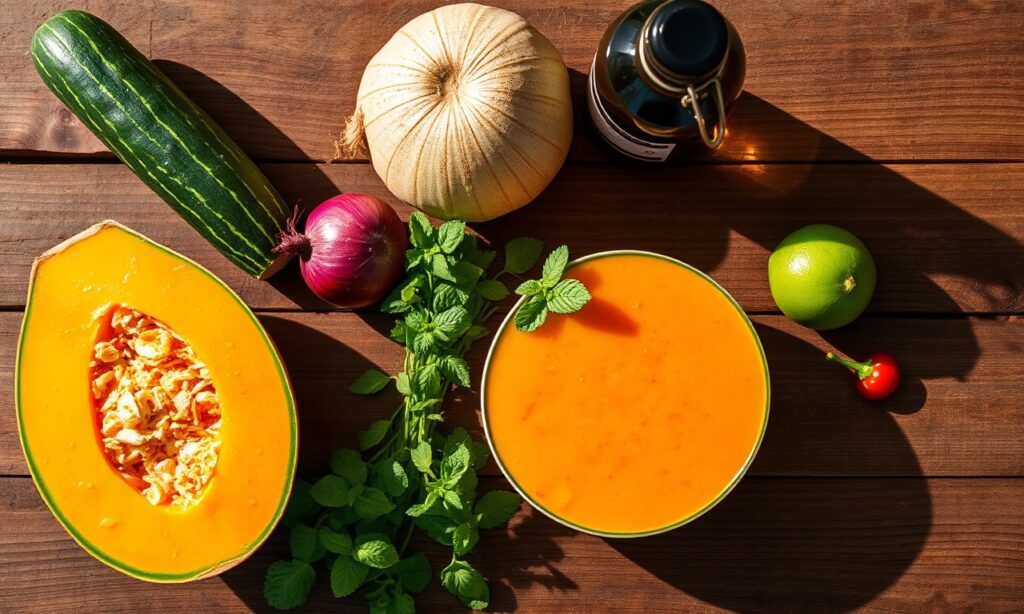
The foundation of an exceptional Cantaloupe Gazpacho is, unequivocally, the cantaloupe itself. Selecting the right melon is a crucial first step. Look for a cantaloupe that feels heavy for its size, has a prominent sweet aroma (especially at the blossom end), and a slightly raised, yellowish netting. The flesh should be a vibrant orange, yielding slightly to gentle pressure.
The Essential Symphony of Flavors:
- Ripe Cantaloupe: The star. Aim for about 1 kg (2.2 lbs) of peeled, seeded, and roughly chopped ripe cantaloupe. The sweetness and delicate melon aroma are irreplaceable.
- Cucumber: Adds essential freshness and a cool, crisp counterpoint to the melon’s sweetness. Use 1 large English cucumber (about 300g / 10.5 oz), peeled, seeded, and roughly chopped. English cucumbers have fewer seeds and a thinner skin, making them ideal.
- Red Onion or Shallots: For a subtle pungent depth, not overpowering sharpness. Half a small red onion (about 50g / 1.7 oz) or 2-3 shallots, finely chopped, will suffice. Soaking the red onion in ice water for 10 minutes before adding can mellow its bite.
- Fresh Mint and/or Basil: These herbs are vital for lifting the flavors and adding aromatic complexity. A generous handful, about 20-30g (0.7-1 oz) of fresh mint leaves, and optionally, a smaller amount of basil, will work wonders.
- Lime or Lemon Juice: Essential for balancing the sweetness and adding a bright, acidic lift. Start with 2 tablespoons (30ml)** of fresh lime or lemon juice, and adjust to taste.
- Extra Virgin Olive Oil: Provides a silky texture and a subtle, fruity richness. 3-4 tablespoons (45-60ml)** of a good quality, light-bodied olive oil is recommended.
- Optional: Jalapeño or Serrano Pepper: For a gentle warmth that enhances the sweetness rather than competes with it. Half a small jalapeño or serrano pepper (seeds removed)**, or to taste.
- Salt and Freshly Ground Black Pepper: To season and enhance all the other flavors.
- Cold Water or Coconut Water: To achieve the desired consistency. Start with 1/2 cup (120ml)** and add more as needed. Coconut water can add a subtle tropical note.
The Art of Preparation: Crafting the Perfect Chill
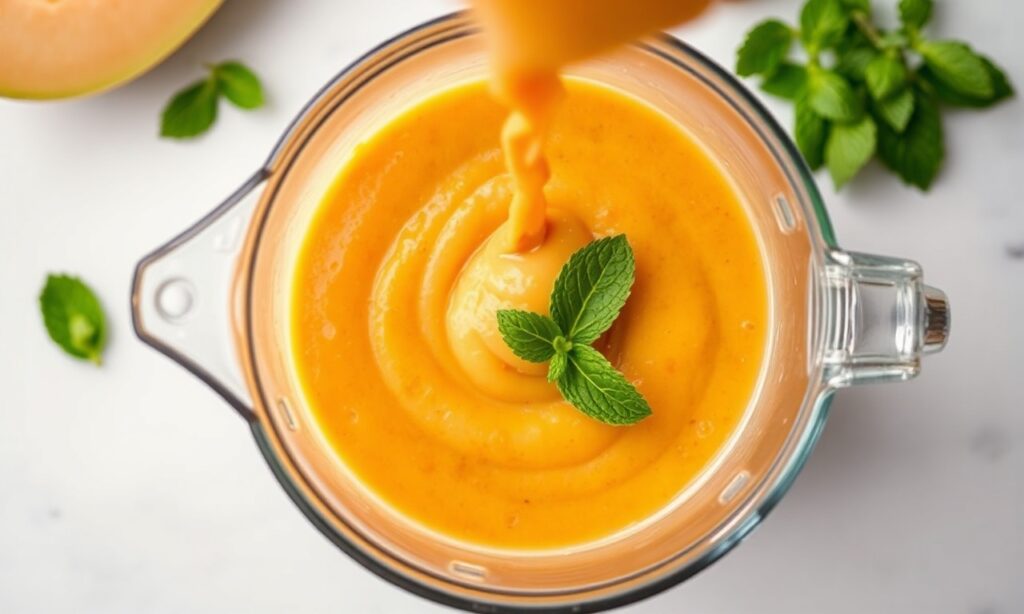
The beauty of gazpacho lies in its simplicity of preparation, and Cantaloupe Gazpacho is no exception. The goal is to blend the ingredients until smooth, but not so much that the vibrant freshness is lost. Precision in blending is key to achieving a luxurious mouthfeel without compromising the distinct character of each component.
- Prepare the Melon: Begin by peeling, seeding, and roughly chopping the ripe cantaloupe. Place the chopped melon into your blender or food processor.
- Add the Savory Elements: Introduce the peeled, seeded, and chopped cucumber, along with the finely chopped red onion (or shallots).
- Incorporate Herbs and Spice: Add the fresh mint leaves (and basil, if using). If you desire a touch of heat, add the deseeded jalapeño or serrano pepper now.
- Emulsify with Liquids: Pour in the fresh lime or lemon juice and the extra virgin olive oil. Add about 1/2 cup (120ml)** of cold water or coconut water.
- Season and Blend: Season generously with salt and freshly ground black pepper. Begin blending on a low speed, gradually increasing to high. Blend until the mixture is smooth and homogenous, but avoid over-blending, which can make the texture gummy. If the gazpacho is too thick, add more cold water or coconut water, a tablespoon at a time, until your desired consistency is reached.
- Taste and Adjust: This is a critical step. Taste the gazpacho and adjust the seasoning. Does it need more salt? A touch more acidity from the lime/lemon juice? Perhaps a hint more sweetness, which can be achieved by adding a tiny drizzle of agave or honey, though usually, ripe cantaloupe provides sufficient sweetness.
- Chill Thoroughly: Transfer the blended gazpacho to an airtight container and refrigerate for at least 2-3 hours, or preferably overnight. This chilling period is crucial for the flavors to meld and deepen, and for the soup to reach its optimal refreshing temperature.
Nutritional Snapshot: A Refreshing Payload
While Cantaloupe Gazpacho is a delightful culinary experience, it also offers a respectable nutritional profile, making it a guilt-free indulgence during warmer months. The exact figures will vary based on ingredient ratios and specific brands used, but here’s a general breakdown per serving (assuming 4 servings from the recipe above):
- Calories: Approximately 100-150 kcal. The majority comes from the natural sugars in the cantaloupe and the olive oil.
- Carbohydrates: Around 15-25g, primarily from the melon’s natural sugars and fiber.
- Fiber: A good source, contributing around 2-4g, aiding digestion.
- Fat: Mostly healthy monounsaturated fats from the extra virgin olive oil, around 5-8g.
- Protein: Relatively low, typically under 2g.
- Vitamins and Minerals: Cantaloupe is an excellent source of Vitamin C and a good source of Vitamin A (in the form of beta-carotene). It also provides potassium and other essential micronutrients. Cucumber contributes hydration and a small amount of vitamins.
The hydration factor is significant. With its high water content from both cantaloupe and cucumber, gazpacho is an excellent way to stay hydrated during hot weather. Furthermore, the fresh ingredients provide a natural boost of antioxidants.
Elevating Cantaloupe Gazpacho: Pro Tips for a Polished Presentation
To truly transform this simple soup into a restaurant-worthy dish, consider these expert enhancements. These techniques add layers of flavor and visual appeal, making your Cantaloupe Gazpacho a memorable culinary creation.
Expert Pro-Tips:
- Garnishes are Paramount: The right garnish can elevate the visual appeal and flavor profile significantly. Consider:
- Crispy Prosciutto or Pancetta: A few tiny, crumbled pieces add a salty, savory crunch that beautifully contrasts the sweet melon.
- Toasted Pepitas (Pumpkin Seeds): Offer a delightful nutty texture and flavor.
- Microgreens or Tiny Mint/Basil Leaves: For a pop of color and fresh aroma.
- A Drizzle of Balsamic Glaze: Its sweet and tangy notes can provide an unexpected but welcome complexity.
- A Tiny Dollop of Crème Fraîche or Greek Yogurt: For a touch of creamy richness, especially if you’ve made the gazpacho spicier.
- Texture Play: While a smooth gazpacho is classic, consider adding a textural element. A small portion of finely diced cantaloupe, cucumber, and red onion, reserved before blending, can be stirred back in just before serving for a delightful bite.
- Herb Infusion: For a more intense herbaceous note, gently muddle some mint or basil leaves with a pinch of sugar and a splash of lime juice before adding them to the blender.
- The Cold Factor: Ensure every ingredient is as cold as possible before blending. This helps achieve a naturally chilled soup without diluting the flavor with ice. Consider chilling your blender pitcher beforehand.
- Spice Control: When adding chili, start with a very small amount. You can always add more, but you can’t take it away. A subtle warmth is more sophisticated than overt heat for this delicate dish.
Serving Suggestions: Beyond the Bowl
Cantaloupe Gazpacho is incredibly versatile. It shines as a light, refreshing starter for a summer meal, especially one featuring grilled fish or poultry. It can also serve as an elegant palate cleanser between courses. For a truly light lunch, serve it in a larger bowl with a side of crusty bread and perhaps a small, fresh salad. Don’t underestimate its potential as a base for other chilled creations; a spoonful of this gazpacho can add a vibrant, fruity dimension to ceviche or a seafood salad.
Troubleshooting Common Cantaloupe Gazpacho Pitfalls
Even the most experienced cooks can encounter minor issues. Here are solutions to common problems:
- Too Sweet: If your gazpacho tastes overwhelmingly sweet, the solution is simple: acidity and salt. Add more fresh lime or lemon juice, a little at a time, and a pinch more salt. A very tiny splash of vinegar (white wine or apple cider) can also help, but use sparingly.
- Too Bland: This usually means the seasoning is insufficient, or the ingredients weren’t vibrant enough. Ensure you’ve seasoned generously with salt. Re-evaluate the acidity – a bit more lime or lemon can brighten flavors. Consider adding a small pinch of sugar or a drizzle of agave if the melon itself wasn’t sweet enough, but prioritize salt and acid first.
- Grainy Texture: This typically happens if the blender isn’t powerful enough or if you’ve over-blended, incorporating too much air. If it’s slightly grainy, you can try passing the gazpacho through a fine-mesh sieve. For future batches, ensure your blender is capable of achieving a smooth puree, and blend in shorter bursts.
- Watery Consistency: If you’ve added too much water, the flavor will be diluted. The best way to fix this is to strain the gazpacho through a cheesecloth-lined sieve to remove some of the liquid, concentrating the flavors. For future preparations, add liquid very gradually.
Conclusion: A Summer Essential Redefined
Cantaloupe Gazpacho is more than just a recipe; it’s an invitation to experience summer’s bounty in a profoundly refreshing and sophisticated way. By understanding the interplay of sweet and savory, embracing peak-season ingredients, and employing a few key techniques, you can create a dish that is both remarkably simple and elegantly complex. This chilled soup, with its vibrant color and nuanced flavor, stands as proof of the fact that culinary innovation often lies in reimagining tradition and celebrating the inherent beauty of fresh produce. It’s a dish that deserves a prominent place in your summer repertoire, a delightful secret waiting to be shared.
Frequently Asked Questions
What is the best type of cantaloupe to use for gazpacho?
The ideal cantaloupe for gazpacho is one that is perfectly ripe, fragrant, and sweet. Look for melons that feel heavy for their size, have a sweet aroma at the blossom end, and a slightly netted rind. The flesh should be a deep, vibrant orange. Avoid melons that are too hard or have an underdeveloped scent, as these will result in a less flavorful gazpacho.
Can I make Cantaloupe Gazpacho ahead of time?
Absolutely. In fact, making Cantaloupe Gazpacho ahead of time is highly recommended. Chilling the soup for at least 2-3 hours, and preferably overnight, allows the flavors to meld and deepen, resulting in a much more harmonious and delicious final product. It can typically be stored in an airtight container in the refrigerator for up to 2-3 days.
What are some good savory additions to Cantaloupe Gazpacho?
Beyond the standard cucumber and onion, consider adding a small amount of bell pepper (yellow or orange for color, red for sweetness), a pinch of smoked paprika for depth, or a tiny clove of garlic for a subtle savory kick. A small amount of finely diced celery can also add a refreshing crunch and subtle savory note.
How can I make Cantaloupe Gazpacho vegan?
Cantaloupe Gazpacho is naturally vegan if you exclude any dairy-based garnishes like crème fraîche. Ensure you use extra virgin olive oil and water or plant-based milk (like coconut water or almond milk) for the liquid base. If adding a creamy garnish, opt for a vegan yogurt or a cashew cream.
Is Cantaloupe Gazpacho suitable for a light meal?
Yes, Cantaloupe Gazpacho is an excellent choice for a light meal. Its high water content, coupled with beneficial nutrients, makes it hydrating and satisfying without being heavy. Serve it with a whole-grain bread, a small side salad, or some protein like grilled shrimp or chicken for a more complete and balanced light lunch.
See also: Cantaloupe Gazpacho