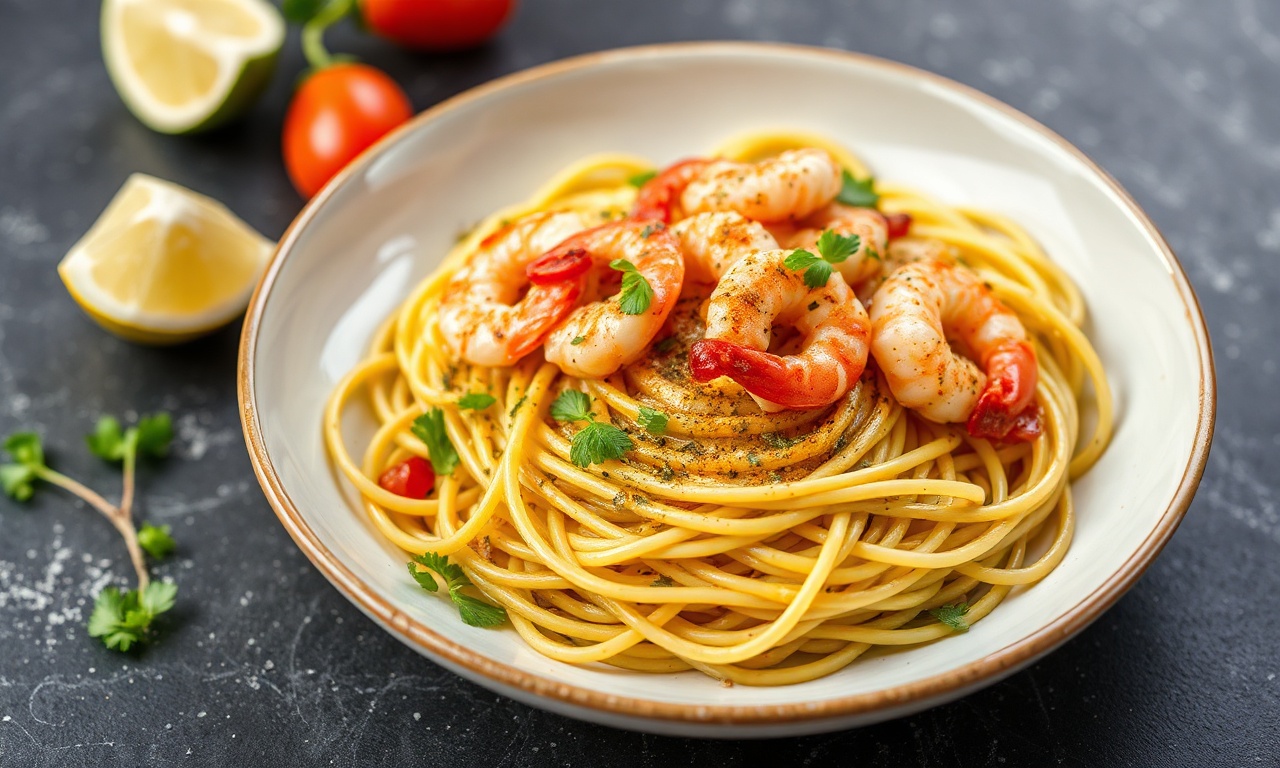

Could a dish as seemingly simple as Shrimp Scampi hold the secrets to a lighter, more nutrient-dense culinary experience, without sacrificing its beloved rich flavors? For many, Shrimp Scampi evokes images of buttery, garlicky pasta. But what if we could reimagine this classic, infusing it with the vibrant freshness and health-conscious appeal of zucchini noodles, all while maintaining that irresistible allure? This guide unlocks that potential, offering professional insights to transform your kitchen into a haven of sophisticated, guilt-free indulgence.
- The Genesis of Shrimp Scampi and its Zucchini Noodle Renaissance
- Mastering the Art of Shrimp Selection and Preparation
- The Foundation: Crafting the Perfect Garlic-Butter-Lemon Sauce
- The Star of the Show: Perfecting Zucchini Noodles
- Bringing It All Together: The Symphony of Shrimp and Zoodles
- Nutritional Insights: A Healthier Take on a Classic
- Elevating Your Shrimp Scampi: Pro-Tips from the Kitchen
- 1. The Power of Quality Ingredients
- 2. The Nuance of Wine and Broth
- 3. The Secret to Tender Shrimp
- 4. The Zing of Fresh Herbs
- 5. The Subtle Heat of Chili
- Conclusion: A Culinary Victory
- Frequently Asked Questions
- What is the best type of shrimp to use for Shrimp Scampi with zucchini noodles?
- How do I prevent zucchini noodles from becoming watery?
- Can I make Shrimp Scampi with zucchini noodles ahead of time?
- What can I use instead of white wine in the sauce?
- Are there any other vegetables that pair well with Shrimp Scampi?
Shrimp Scampi, at its heart, is a celebration of pristine ingredients: succulent shrimp, fragrant garlic, bright lemon, and a touch of white wine or broth, all brought together by the luxurious embrace of butter and olive oil. When we introduce zucchini noodles, or “zoodles,” we’re not merely substituting; we’re embarking on a culinary evolution. This isn’t about mere imitation; it’s about synergy, creating a dish that honors the spirit of the original while embracing modern dietary aspirations and a heightened appreciation for fresh, whole foods. This article explore the nuances of preparing the ultimate Shrimp Scampi with zucchini noodles, from sourcing the finest ingredients to mastering the techniques that elevate it from a simple weeknight meal to a gourmet experience.
The true art of Shrimp Scampi with zucchini noodles lies not in compromising flavor for health, but in harmonizing them, creating a symphony of taste and texture that nourishes both body and soul.
The Genesis of Shrimp Scampi and its Zucchini Noodle Renaissance
The origins of Shrimp Scampi are often debated, with strong ties to both Italian-American and Italian culinary traditions. The term “scampi” itself, in Italian cuisine, traditionally refers to a type of langoustine. However, in the United States, it evolved to describe a preparation method: sautéed shrimp in a garlic-butter-wine sauce. This adaptation, often served over pasta, became a staple in Italian-American restaurants and home kitchens, lauded for its speed and satisfying richness. Its enduring popularity speaks to its fundamental appeal – a quick, flavorful dish that feels both comforting and elegant.
The advent of the spiralizer and the growing global awareness of carbohydrate-conscious diets have propelled zucchini noodles into the mainstream. They offer a remarkably neutral yet texturally engaging base that readily absorbs the vibrant flavors of sauces. Pairing them with Shrimp Scampi presents a compelling opportunity to lighten a traditionally heavy dish, making it more accessible to those managing dietary restrictions or simply seeking a more balanced meal. This fusion is proof of culinary adaptability, proving that beloved classics can be reinvented for contemporary palates.
The Nutritional Paradigm Shift
Shifting from traditional pasta to zucchini noodles significantly alters the nutritional profile of Shrimp Scampi. A typical cup of cooked spaghetti contains approximately 220 calories and 43 grams of carbohydrates. In contrast, a cup of spiralized zucchini, when lightly sautéed, offers around 20 calories and 4 grams of carbohydrates. This dramatic reduction in calories and carbohydrates makes the dish suitable for ketogenic, paleo, and low-carb diets, while also being an excellent choice for individuals monitoring their blood sugar levels. Furthermore, zucchini is a good source of Vitamin C, potassium, and fiber, contributing to overall health and digestive well-being. Research suggests the benefits of increasing vegetable intake for managing chronic diseases, a principle that this reimagined Shrimp Scampi wholeheartedly embraces.
Mastering the Art of Shrimp Selection and Preparation
The quality of your shrimp is paramount to the success of any Shrimp Scampi, and this holds especially true when it’s paired with delicate zucchini noodles.
Choosing the Right Shrimp
For Shrimp Scampi, aim for medium to large shrimp, typically labeled as 21/25 or 31/40 count per pound. These sizes offer a satisfying bite without becoming tough during the quick cooking process. Whether you opt for fresh or frozen, ensure they are high-quality.
- Fresh vs. Frozen: If using frozen, thaw them completely under cold running water or in the refrigerator overnight. Avoid microwaving, as this can partially cook the shrimp and affect their texture.
- Deveining: This is a non-negotiable step. The vein is the digestive tract of the shrimp and can impart a gritty texture and off-flavor. Use a sharp paring knife to make a shallow cut along the back of the shrimp and gently pull out the dark vein with the tip of your knife or a toothpick.
- Peeling: For Shrimp Scampi, it’s traditional to peel the shrimp, leaving the tail on for visual appeal and a convenient handle. This also allows the shrimp to absorb the sauce more effectively.
The Crucial Marinade (Optional but Recommended)
While not strictly traditional, a brief marination can infuse the shrimp with an extra layer of flavor and ensure they are perfectly seasoned. A simple marinade of olive oil, minced garlic, lemon zest, a pinch of red pepper flakes, and a whisper of salt can work wonders. However, be mindful of the acidity from lemon juice, as prolonged marination can “cook” the shrimp. A 15-30 minute soak is usually sufficient.
The Foundation: Crafting the Perfect Garlic-Butter-Lemon Sauce
The sauce is the soul of Shrimp Scampi. For zucchini noodles, we need a sauce that is potent in flavor but not overwhelmingly heavy, ensuring the delicate zoodles aren’t drowned or made soggy.
Ingredients for the Ultimate Sauce:
This recipe is scaled for approximately 4 servings, designed to be served with about 4 medium zucchini.
- 2 tablespoons unsalted butter
- 2 tablespoons extra virgin olive oil
- 4-6 cloves garlic, minced (adjust to your preference, but don’t be shy!)
- 1/4 teaspoon red pepper flakes (optional, for a hint of heat)
- 1/2 cup dry white wine (such as Pinot Grigio or Sauvignon Blanc) or low-sodium chicken/vegetable broth
- Juice of 1/2 to 1 whole lemon (start with half, add more to taste)
- 2 tablespoons fresh parsley, chopped (plus more for garnish)
- Salt and freshly ground black pepper, to taste
Technique for Flavor Infusion
The key to a magnificent scampi sauce lies in the careful layering of flavors and controlled heat.
- Sauté Aromatics: In a large skillet over medium heat, melt the butter with the olive oil. Once shimmering, add the minced garlic and red pepper flakes (if using). Sauté gently for about 1-2 minutes until fragrant, being extremely careful not to burn the garlic. Burnt garlic turns bitter and will ruin the dish.
- Deglaze: Pour in the white wine (or broth). Increase the heat slightly and let it bubble and reduce by about half, scraping up any browned bits from the bottom of the pan. This process, known as deglazing, releases fantastic flavor.
- Incorporate Lemon and Seasoning: Stir in the lemon juice and chopped parsley. Season with salt and freshly ground black pepper. Taste and adjust the lemon and seasoning as needed. The sauce should be bright and well-balanced.
The Star of the Show: Perfecting Zucchini Noodles
Zucchini noodles offer a delightful crunch and absorb flavors beautifully, but their delicate nature requires careful handling.
Preparing Your Zoodles
You have several options for preparing zucchini noodles:
- Spiralizer: This is the most common and efficient method. Use a spiralizer to create long, spaghetti-like strands.
- Julienne Peeler: A julienne peeler can create thinner, ribbon-like noodles.
- Mandoline: With the julienne attachment, a mandoline can also be used.
- Knife: For a more rustic texture, you can meticulously julienne the zucchini by hand with a sharp knife.
For this recipe, aim for strands that are approximately the thickness of spaghetti or slightly thinner.
The Art of Sautéing Zucchini Noodles
This is where many home cooks falter, resulting in watery or mushy zoodles. The secret is *minimal* cooking time and *high* heat.
- Pat Dry: After spiralizing, place the zoodles in a colander and sprinkle them with a pinch of salt. Let them sit for 10-15 minutes to draw out excess moisture. Gently pat them dry with paper towels before cooking. This step is crucial for avoiding a watery sauce.
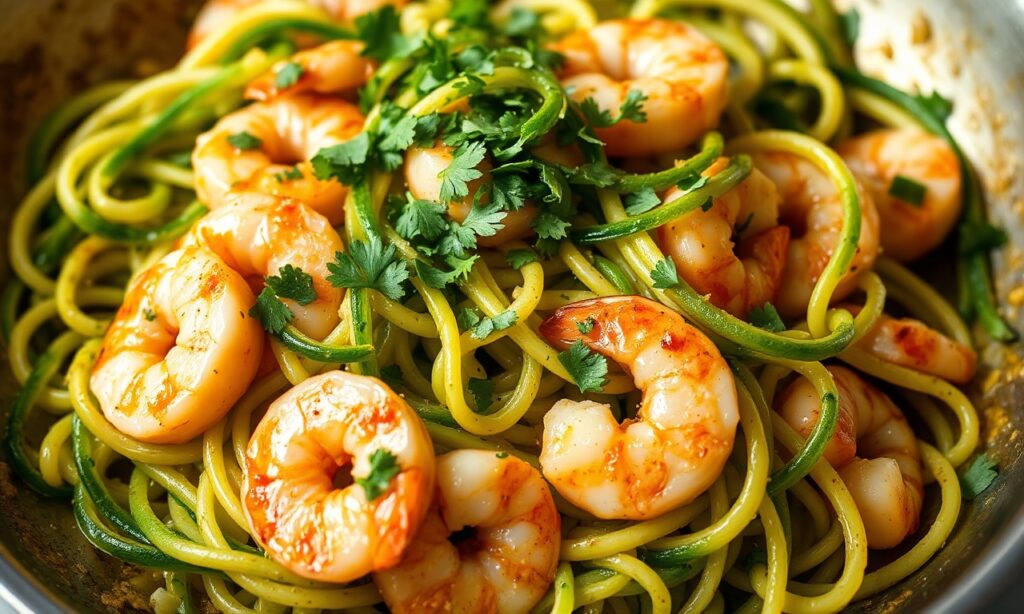
- Quick Sauté: Once your scampi sauce is ready and the shrimp are almost cooked, add the dried zoodles directly to the skillet with the sauce. Toss gently for only 1-2 minutes, just until they are slightly tender but still have a pleasant al dente bite. Overcooking will release too much water and make them limp.
Bringing It All Together: The Symphony of Shrimp and Zoodles
The final assembly is a swift, elegant dance of ingredients.
The Cooking Process
- Cook the Shrimp: Add the prepared shrimp to the skillet with the scampi sauce. Cook for 2-4 minutes, stirring occasionally, until the shrimp are pink and opaque. Do not overcook, or they will become rubbery.
- Introduce Zoodles: Add the prepared and dried zucchini noodles to the skillet. Toss gently with tongs for 1-2 minutes, allowing them to absorb the sauce and heat through.
- Final Touches: Stir in the remaining fresh parsley. Taste and adjust seasoning one last time. If the sauce seems too thick, a tablespoon of the reserved pasta water (if you used traditional pasta alongside) or a splash of broth can loosen it. For zoodles, this is rarely needed if they were properly dried.
Serving Suggestions
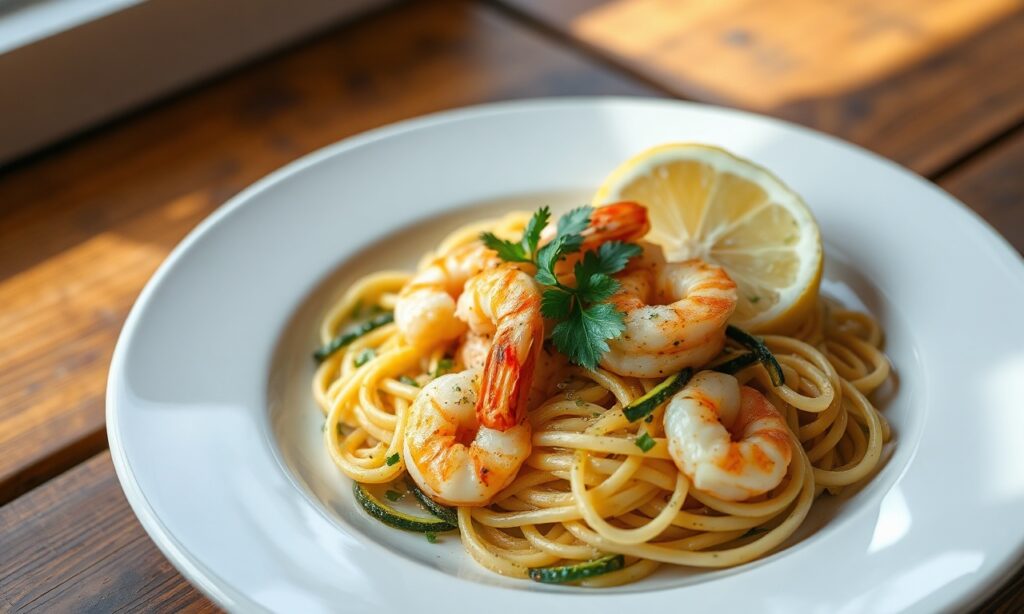
Serve immediately. Garnish with extra chopped fresh parsley and a wedge of lemon. For those who desire a more substantial meal or are not strictly adhering to a low-carb diet, a small portion of linguine or angel hair pasta can be served alongside or beneath the zoodles. A sprinkle of grated Parmesan cheese is also a popular addition, though purists might omit it to maintain the purity of the garlic-lemon-butter profile.
Nutritional Insights: A Healthier Take on a Classic
The following nutritional information is an estimate per serving, assuming 4 servings and using primarily zucchini noodles. This can vary based on exact ingredient quantities and shrimp size.
- Calories: Approximately 250-300 kcal
- Protein: 20-25g
- Fat: 15-20g (largely healthy fats from olive oil and butter)
- Carbohydrates: 5-10g (primarily from zucchini)
- Fiber: 2-3g
- Sodium: Varies based on added salt and broth used.
This makes Shrimp Scampi with zucchini noodles a significantly lighter and more nutrient-dense option than its pasta-laden counterpart. Studies, such as those examining the Mediterranean diet, consistently show that meals rich in vegetables and lean protein, with healthy fats, contribute to better cardiovascular health and weight management. Research indicates that increased vegetable consumption is associated with a reduced risk of heart disease.
Elevating Your Shrimp Scampi: Pro-Tips from the Kitchen
To truly distinguish your Shrimp Scampi from the ordinary, consider these expert-level enhancements.
1. The Power of Quality Ingredients
- Shrimp: As mentioned, wild-caught is ideal. Look for “dry” packed shrimp, meaning they haven’t been treated with a sodium tripolyphosphate (STP) solution, which can make them watery and less flavorful.
- Garlic: Freshly minced garlic is essential. Pre-minced garlic from a jar often lacks the potent aroma and flavor of fresh cloves.
- Olive Oil: Use a good quality extra virgin olive oil for its robust flavor and health benefits.
- Butter: Unsalted butter allows you to control the salt content precisely.
2. The Nuance of Wine and Broth
While white wine adds a layer of complexity and acidity that complements the shrimp beautifully, not everyone enjoys cooking with alcohol. A high-quality, low-sodium chicken or vegetable broth can be an excellent substitute. For an even richer flavor, consider a seafood or fish stock. When using broth, you might need to slightly increase the lemon juice or add a touch more acidity to achieve the same brightness.
3. The Secret to Tender Shrimp
The most common error is overcooking shrimp. They cook incredibly fast. They should turn pink and opaque within minutes. Remove them from the heat as soon as they are done; residual heat will continue to cook them slightly. A good rule of thumb is to cook them until they just begin to curl into a “C” shape. If they curl into a tight “O,” they are likely overcooked.
4. The Zing of Fresh Herbs
Fresh parsley is traditional, but don’t hesitate to experiment. A small amount of fresh chives, dill, or even a hint of tarragon can add intriguing new dimensions to the dish. Add fresh herbs at the very end of cooking to preserve their vibrant color and flavor.
5. The Subtle Heat of Chili
A pinch of red pepper flakes is common, but for a more nuanced heat, consider a finely minced fresh chili (like a serrano or jalapeño, seeds removed for less heat) added with the garlic. This provides a fresh, bright heat rather than a dried, lingering one.
Conclusion: A Culinary Victory
Shrimp Scampi with zucchini noodles is more than just a healthy alternative; it’s a culinary evolution that celebrates fresh ingredients, vibrant flavors, and mindful eating. By understanding the nuances of each component – from the selection of plump, succulent shrimp to the delicate handling of zucchini noodles and the precise balance of the garlic-lemon-butter sauce – you can create a dish that is both profoundly satisfying and wonderfully nourishing. This recipe serves as proof of the fact that dietary consciousness and gourmet dining are not mutually exclusive. It’s an invitation to explore the lighter side of a beloved classic, proving that every meal can be an opportunity for delicious discovery and healthful indulgence.
Frequently Asked Questions
What is the best type of shrimp to use for Shrimp Scampi with zucchini noodles?
For the best texture and flavor, medium to large wild-caught shrimp (21/25 or 31/40 count per pound) are recommended. Ensure they are deveined and peeled, with the tail on for presentation and ease of eating. Avoid overcooked shrimp, which become rubbery; they cook very quickly.
How do I prevent zucchini noodles from becoming watery?
The key to non-watery zucchini noodles is proper preparation. After spiralizing, salt them lightly in a colander and let them drain for 10-15 minutes to draw out excess moisture. Gently pat them dry with paper towels before adding them to the hot skillet. This step significantly reduces the amount of liquid released during cooking.
Can I make Shrimp Scampi with zucchini noodles ahead of time?
It is best to prepare Shrimp Scampi with zucchini noodles just before serving. Zucchini noodles are delicate and can become mushy if cooked for too long or if the dish sits for an extended period. The shrimp also cook best when fresh. However, you can prepare the sauce and have your shrimp and zoodles ready to go, allowing for a very quick assembly when you’re ready to eat.
What can I use instead of white wine in the sauce?
If you prefer not to use white wine, you can substitute it with an equal amount of high-quality, low-sodium chicken broth, vegetable broth, or seafood stock. For a richer flavor profile, consider using fish or seafood stock. You may need to add a little extra lemon juice or a splash of white wine vinegar to achieve the desired brightness if using broth.
Are there any other vegetables that pair well with Shrimp Scampi?
Certainly! While zucchini noodles are a fantastic low-carb base, you can also incorporate other quick-cooking vegetables. Thinly sliced bell peppers (any color), cherry tomatoes, asparagus spears, or snap peas can be added to the skillet along with the shrimp for added color, texture, and nutrients. Ensure they are cut to a size that will cook quickly without becoming mushy.
See also: Shrimp Scampi