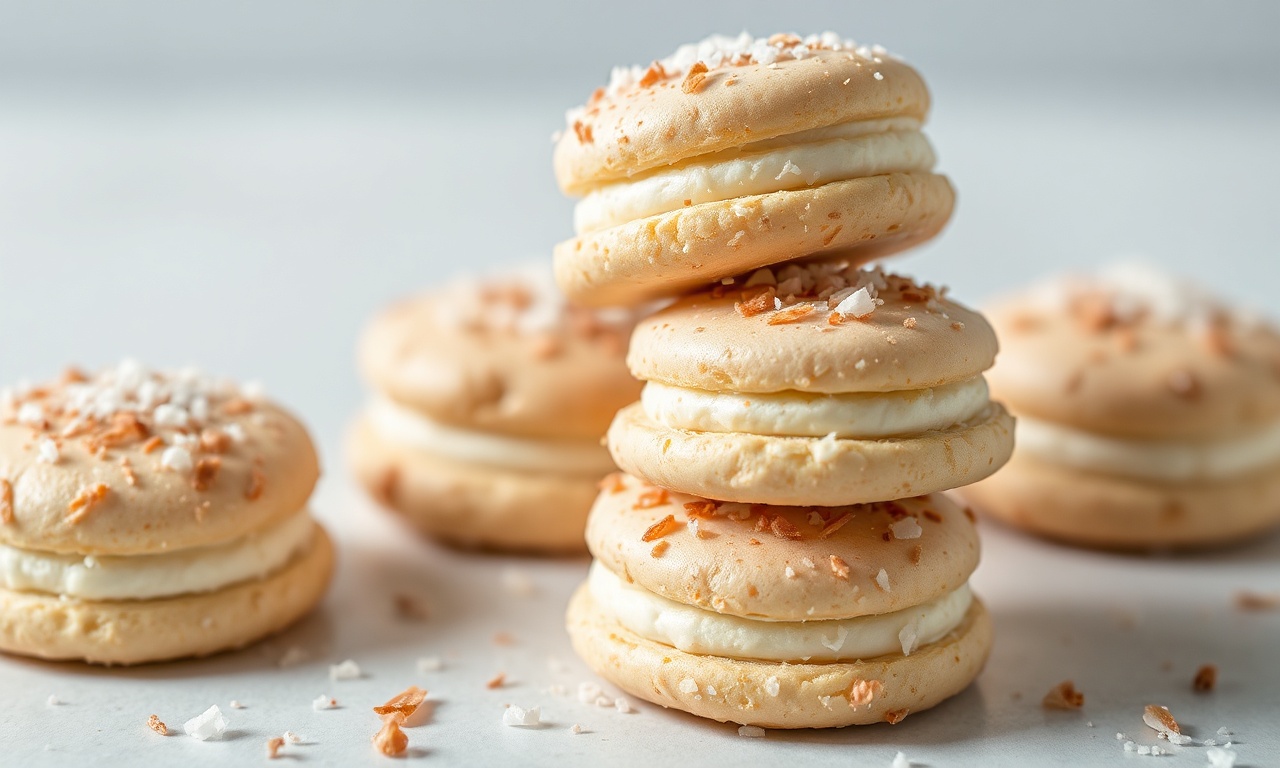

- Coconut Macaroons: The Expert’s Essential Guide to Perfect Sweetness
- Key Takeaways:
- Coconut Macaroons: The Science of the Perfect Chew
- Essential Ingredients for Superior Macaroons
- Coconut Varieties: The Heart of the Flavor
- Binding Agents and Sweeteners: The Structural Foundation
- Flavor Enhancers: The Subtle Nuances
- Mastering the Macaroon: An Expert Method
- Preheat and Prepare:
- Combine Dry Ingredients:
- Incorporate Wet Ingredients:
- Add Flavorings:
- Form the Macaroons:
- Bake to Golden Perfection:
- Cool and Enjoy:
- Nutritional Considerations
- Troubleshooting Common Macaroon Mistakes
- Problem: Dry and Crumbly Macaroons
- Problem: Macaroons Spreading Too Much
- Problem: Uneven Browning or Burnt Edges
- Problem: Pale and Undercooked Appearance
- The Art of Refined Baking
- Frequently Asked Questions
Coconut Macaroons: The Expert’s Essential Guide to Perfect Sweetness
Coconut macaroons are often misunderstood, relegated to the realm of overly sweet, crumbly confections. Yet, when approached with precision and an understanding of their delicate balance, they transform into an exquisite testament to simple ingredients elevated by masterful technique. Forget the dense, jaw-breaking versions; we are talking about a nuanced pastry that offers a delightful chew, a rich coconut aroma, and a subtle sweetness that perfectly complements its tropical essence. This is not merely a cookie; it’s an experience, a whisper of sunshine in every bite.
Key Takeaways:
- The secret to superior coconut macaroons lies not in complicating the recipe, but in perfecting the technique and selecting high-quality ingredients.
- Achieving the ideal chewy texture and golden-brown exterior requires precise control over baking time and temperature, often deviating from standard cookie practices.
- Understanding the role of each ingredient—from the type of coconut to the binding agents—is crucial for consistent, delightful results.
When it comes to Coconut Macaroons, The allure of the coconut macaroon stems from its deceptively simple composition. It is a pastry that demands respect for its core ingredients: shredded coconut, egg whites, sugar, and a touch of binder. However, the magic unfolds in the execution. Many home bakers fall into the trap of over-mixing, leading to tough macaroons, or under-baking, resulting in a pale, uninspired cookie. The true art lies in coaxing out the coconut’s natural oils and achieving that signature tender, slightly gooey interior encased in a delicately crisp shell. This requires a nuanced approach, a departure from the creaming methods of butter cookies, and a deep appreciation for the science of meringue and caramelization.
In the context of Coconut Macaroons, While the term “macaroon” often conjures images of the French macaron with its smooth shell and ganache filling, the coconut macaroon boasts a more humble, yet equally rich, heritage. Its origins are intertwined with the broader history of almond-based confections, with early versions dating back to 8th-century Italian monasteries. As European culinary traditions spread, so did these sweet treats. The addition of coconut, a readily available tropical ingredient, likely emerged in the 19th century, particularly in regions where coconuts were abundant. This adaptation transformed a delicate almond meringue into a more robust, chewy confection, solidifying its identity as the beloved coconut macaroon.
Around Coconut Macaroons, The evolution from a simple meringue to a distinctly chewy cookie highlights a fascinating interplay between ingredient availability, culinary innovation, and evolving popular tastes. The widespread adoption of coconut as a primary ingredient marks a significant divergence from its almond-cousin, creating a unique textural and flavor profile that has captivated palates worldwide.
Coconut Macaroons: The Science of the Perfect Chew
Regarding Coconut Macaroons, The cornerstone of an exceptional coconut macaroon is its texture: a delicate balance between a slightly crisp exterior and a wonderfully chewy, moist interior. This is not an accidental outcome; it’s a result of understanding how ingredients interact under heat. The high sugar content, combined with the natural fats in the coconut, contributes significantly to this characteristic chew. Egg whites, when whipped, provide the airy structure, but their role extends beyond mere leavening. They act as a binder, emulsifying the fats and sugars, and as they cook, they contribute to the macaroon’s tender crumb.
When it comes to Coconut Macaroons, Research published in the Journal of Food Science has explored the complex interactions between sugar, protein, and fat in baked goods, revealing how precise ratios and cooking temperatures dictate textural outcomes. For macaroons, a slightly lower baking temperature for a longer duration is often key, allowing the interior to cook through and the sugars to achieve a desirable chewiness without burning the exterior. This contrasts with cookies that rely on high heat for rapid setting, which can lead to a drier, more brittle result.

Essential Ingredients for Superior Macaroons
In the context of Coconut Macaroons, Achieving coconut macaroon perfection begins with the quality and type of ingredients used. While seemingly straightforward, each component plays a critical role in the final outcome.
Coconut Varieties: The Heart of the Flavor
- Shredded Coconut: This is arguably the most crucial ingredient. For the most authentic and pleasing texture, sweetened, shredded coconut is generally preferred. Its finer shred size and pre-existing moisture content contribute to a better binding and a softer chew. However, for those who wish to control the sweetness precisely, unsweetened shredded coconut can be used, requiring a slight adjustment in the sugar quantity. The texture of the shred matters; avoid large flakes for a more uniform macaroon.
- Desiccated Coconut: While it offers an intense coconut flavor, desiccated coconut has very little moisture. This can lead to a drier, more brittle macaroon unless carefully rehydrated or used in conjunction with other moistening agents. It is typically not the first choice for classic chewy macaroons.
Binding Agents and Sweeteners: The Structural Foundation
- Egg Whites: These are the primary binder and leavening agent. They must be at room temperature for optimal whipping, creating a more stable meringue. Many recipes call for lightly beaten egg whites, not stiff peaks, to avoid an overly airy and crumbly macaroon. The goal is to create a glossy mixture that holds together.
- Sweetened Condensed Milk: In many popular recipes, sweetened condensed milk serves as a binder, replacing some or all of the egg whites and sugar. It provides moisture, sweetness, and a rich, creamy texture that guarantees chewiness. This is a common shortcut to achieving a moist macaroon with minimal effort, though it alters the fundamental meringue-based structure.
Flavor Enhancers: The Subtle Nuances
- Granulated Sugar: This provides sweetness and contributes to the crisp exterior and chewy interior. The amount can be adjusted based on whether sweetened or unsweetened coconut is used, and personal preference.
- Vanilla Extract: A small amount of pure vanilla extract enhances the overall flavor profile, adding a warm, aromatic depth that complements the coconut beautifully.
- Salt: A pinch of salt is essential to balance the sweetness and amplify the coconut flavor. It’s a small addition that makes a significant difference.
Mastering the Macaroon: An Expert Method
Crafting perfect coconut macaroons is an exercise in precision and patience. The following method emphasizes techniques that yield superior results, moving beyond basic instructions to expert execution.
-
Preheat and Prepare:
Around Coconut Macaroons, Preheat your oven to 300°F (150°C). Line baking sheets with parchment paper or silicone baking mats. This is crucial to prevent sticking and ensure even baking. For macaroons, a lower temperature and longer baking time are preferred over high heat, which can scorch the delicate sugars and dry out the coconut too quickly.
-
Combine Dry Ingredients:
Regarding Coconut Macaroons, In a medium bowl, whisk together the shredded coconut, granulated sugar (if using), and salt. Ensure there are no clumps. If using unsweetened coconut and relying on condensed milk for sweetness, you might omit or significantly reduce the granulated sugar here.
-
Incorporate Wet Ingredients:
- Method A (Egg White Based): In a separate bowl, lightly whisk 2 large egg whites until just frothy. Do not whip to stiff peaks; you want them to be liquid and glossy. Gently fold the egg whites into the coconut mixture until just combined. Over-mixing will develop gluten in any residual flour or starch, leading to toughness.
- Method B (Sweetened Condensed Milk Based): Pour 1 can (14 oz / 396g) of sweetened condensed milk into the coconut mixture. Add the vanilla extract. Stir until the mixture is uniformly moist and holds together when squeezed. This method is far more forgiving and often yields a consistently chewy result.
-
Add Flavorings:
Stir in 1 teaspoon of pure vanilla extract and, if using, a pinch of salt.
-
Form the Macaroons:
Using a cookie scoop or two spoons, drop mounds of the mixture onto the prepared baking sheets. Aim for uniform size, about 1.5 to 2 inches in diameter. The mixture will be sticky. You can slightly wet your hands to help shape them if needed, but be gentle.
-
Bake to Golden Perfection:
Bake for 18-25 minutes, or until the edges are golden brown and the tops are lightly golden. The exact time will depend on your oven and the size of your macaroons. They should feel firm to the touch and slightly springy.
-
Cool and Enjoy:
Let the macaroons cool on the baking sheets for 5-10 minutes before transferring them to a wire rack to cool completely. This allows them to set properly.
💡 Expert Insight: For an extra layer of flavor and visual appeal, consider dipping the cooled macaroons halfway into melted dark or white chocolate. Ensure the chocolate is tempered for a professional finish. This addition elevates the simple coconut macaroon to a truly gourmet treat, offering a delightful contrast in texture and taste.
Nutritional Considerations
While coconut macaroons are a delightful indulgence, understanding their nutritional components can aid in mindful consumption. A typical serving of two standard coconut macaroons (without chocolate dipping) contains approximately:
- Calories: 180-220 kcal
- Fat: 10-14g (a significant portion is from healthy fats in coconut)
- Saturated Fat: 8-11g
- Carbohydrates: 20-28g
- Sugars: 16-24g
- Protein: 2-3g
- Fiber: 1-2g
Keep in mind that these are estimates and can vary significantly based on the specific recipe, particularly the amount of sugar and the use of sweetened condensed milk. The fat content, while seemingly high, is largely derived from coconut, which contains medium-chain triglycerides (MCTs).
Troubleshooting Common Macaroon Mistakes
Even with the best intentions, baking can present challenges. Here are some common issues encountered with coconut macaroons and how to overcome them:
-
Problem: Dry and Crumbly Macaroons
Cause: Over-baking, using desiccated coconut without adequate moisture, or over-mixing the batter.
Solution: Reduce baking time, ensure your coconut has sufficient moisture (use sweetened shredded coconut or the condensed milk method), and be very gentle when mixing. -
Problem: Macaroons Spreading Too Much
Cause: Batter too wet, oven temperature too high, or not enough binding agent.
Solution: If the batter is too wet, try adding a tablespoon more coconut. Ensure your oven is calibrated accurately and consider the condensed milk method for better structure. -
Problem: Uneven Browning or Burnt Edges
Cause: Oven temperature too high, or baking sheet placed too low in the oven.
Solution: Lower oven temperature, use parchment paper, and consider moving the baking sheet to the middle rack. Rotate the baking sheets halfway through baking. -
Problem: Pale and Undercooked Appearance
Cause: Under-baking or insufficient browning.
Solution: Bake for the full recommended time, or even a few minutes longer, until the edges are golden brown. The browning is key to flavor and texture.
The Art of Refined Baking
The coconut macaroon, in its perfected form, is proof of how simple ingredients, when treated with respect and technique, can yield extraordinary results. It is a cookie that speaks of warmth, comfort, and a touch of tropical indulgence. Whether you opt for the classic egg white meringue or the conveniently chewy condensed milk version, the journey to crafting these delightful treats is rewarding. By understanding the science behind their texture, selecting the finest ingredients, and applying precise techniques, you can consistently produce coconut macaroons that are not just cookies, but moments of pure, unadulterated bliss. They are, indeed, a proven essential for any discerning baker looking to master a timeless confection.
Frequently Asked Questions
What is the difference between a coconut macaroon and a French macaron?
Coconut macaroons are typically made with shredded coconut, egg whites, and sugar, resulting in a chewy, rustic cookie. French macarons, on the other hand, are made with almond flour, egg whites, and sugar, forming a delicate meringue shell filled with ganache, buttercream, or jam, and have a smooth, crisp exterior with a soft, chewy interior. They are distinct in ingredients, preparation, and final texture.
Can I use unsweetened shredded coconut?
Yes, you can use unsweetened shredded coconut, but you will likely need to increase the amount of sugar in the recipe or rely more heavily on sweetened condensed milk to achieve the desired sweetness and texture. Unsweetened coconut has less moisture, so be mindful of the final consistency of your batter.
How should I store coconut macaroons?
Coconut macaroons can be stored in an airtight container at room temperature for up to 3-4 days. For longer storage, they can be frozen for up to 3 months. Ensure they are completely cooled before storing.
Why are my macaroons spreading too much?
Excessive spreading usually indicates that the batter is too wet, the oven temperature is too low, or there isn’t enough binding agent. Ensure you are using the correct ratios of ingredients and that your oven is preheated to the specified temperature. If using an egg white-based recipe, be careful not to over-beat the whites.
Can I add other flavors to my macaroons?
Absolutely. You can enhance coconut macaroons with various additions. Citrus zest (lime or lemon) pairs wonderfully with coconut. A teaspoon of almond extract can add another layer of nutty complexity. For a richer flavor, consider adding a tablespoon or two of melted unsweetened chocolate or cocoa powder to the batter.
See also: Coconut Macaroons