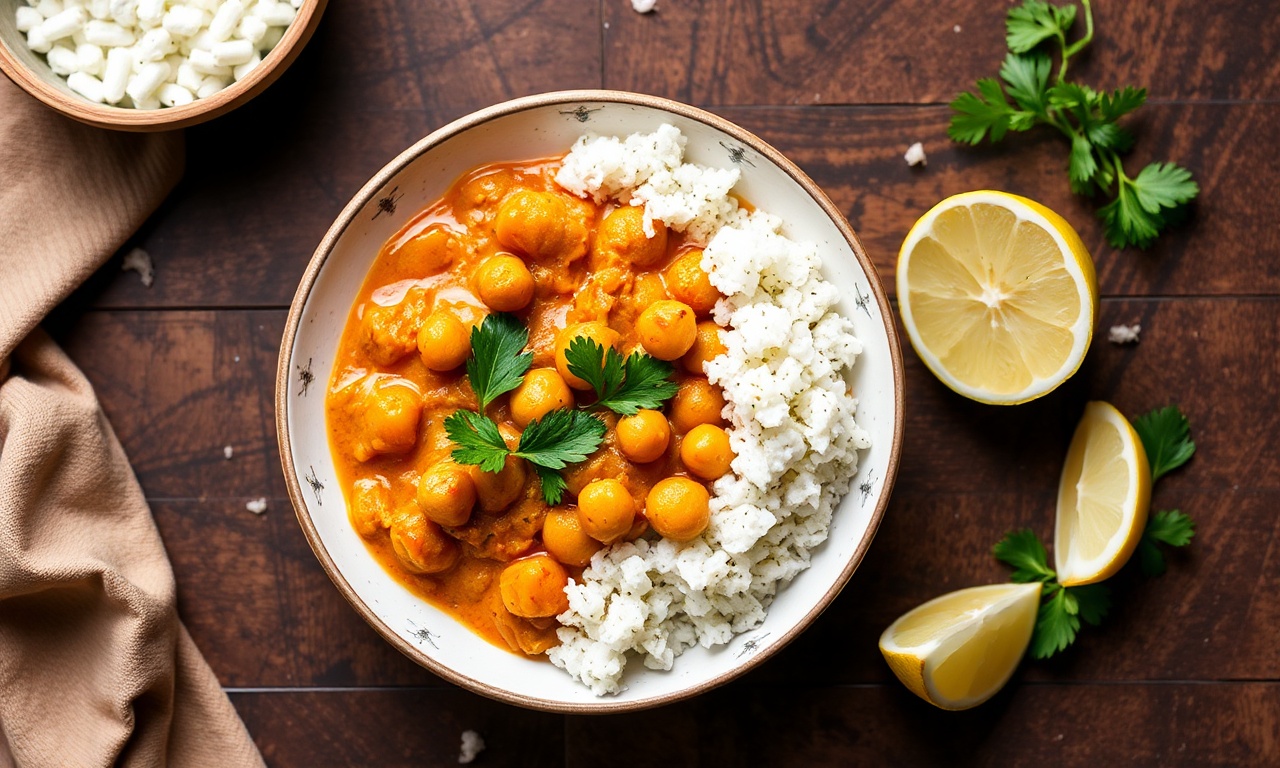

It’s a culinary paradox: how can a dish so profoundly comforting, so explosively flavorful, and so remarkably adaptable, remain on the periphery of many home cooks’ repertoires? The sweet potato and chickpea curry, far from being a mere vegetarian substitute, stands as proof of the power of humble ingredients to create something truly extraordinary. Forget the notion that plant-based meals are inherently bland or demanding; this dish is the antithesis, a vibrant tapestry of textures and tastes that delights the senses and nourishes the body. Its global appeal, from the bustling markets of Delhi to the cozy kitchens of London, speaks volumes about its inherent deliciousness and remarkable versatility.
- The Humble Origins and Global Appeal of Sweet Potato Curry
- Sweet Potato: Mastering the Ingredients: The Foundation of Flavor
- The Stars of the Show: Sweet Potatoes and Chickpeas
- The Aromatic Backbone: Onions, Garlic, and Ginger
- The Spice Symphony: Unlocking the Curry’s Soul
- The Liquid Embrace: Tomatoes and Coconut Milk
- Finishing Touches: Herbs and Acidity
- The Step-by-Step Alchemy: Crafting Your Perfect Curry
- Nutritional Insights: Fueling Your Body with Goodness
- Elevating Your Curry: Expert Tips for Restaurant-Quality Results
- Serving Suggestions: The Perfect Companions
- Frequently Asked Questions
The beauty of this curry lies not just in its taste but in its accessibility. It’s a dish that forgives minor missteps, rewards patient simmering, and offers endless avenues for personalization. Whether you’re a seasoned chef looking for a reliable weeknight staple or a novice venturing into the world of aromatic spices, this guide will equip you with the knowledge and confidence to craft a truly exceptional sweet potato and chickpea curry. We will explore the nuances of ingredient selection, the alchemy of spice blending, and the subtle techniques that elevate this dish from good to unforgettable.
The humble sweet potato, often relegated to side dishes, is a powerhouse ingredient capable of transforming a simple curry into an epicurean delight, offering a perfect balance of sweetness and earthy depth.
The Humble Origins and Global Appeal of Sweet Potato Curry
While the specific combination of sweet potato and chickpea in a curry might not have a single, definitive origin story, its roots are deeply embedded in the rich culinary traditions of South Asia, particularly India. The concept of combining starchy vegetables with pulses and a fragrant spice base is a cornerstone of vegetarian cuisine in the region. Sweet potatoes, with their inherent sweetness and creamy texture when cooked, are a natural fit for the complex flavor profiles of Indian spices. They offer a delightful counterpoint to the savory and often spicy elements of the curry, creating a harmonious balance that is both satisfying and intriguing.
The spread of this dish across the globe is proof of its inherent appeal and adaptability. As global palates have become more adventurous and awareness of plant-based diets has grown, dishes like the sweet potato and chickpea curry have found enthusiastic new homes. It’s a dish that transcends cultural boundaries, easily incorporating regional twists and ingredient preferences. For instance, in Southeast Asia, a touch of coconut milk and lemongrass might be added, while in the Caribbean, a hint of scotch bonnet pepper could introduce a fiery kick. This inherent flexibility ensures its continued relevance and popularity across diverse culinary landscapes.
Research indicates that sweet potatoes are a rich source of beta-carotene, a precursor to Vitamin A, underscoring their nutritional value which contributes to their widespread adoption in healthy eating plans globally.
Sweet Potato: Mastering the Ingredients: The Foundation of Flavor
The success of any great curry hinges on the quality and thoughtful selection of its components. For our Sweet Potato and Chickpea Curry, we aim for a symphony of textures and tastes, where each ingredient matter significantly.
The Stars of the Show: Sweet Potatoes and Chickpeas
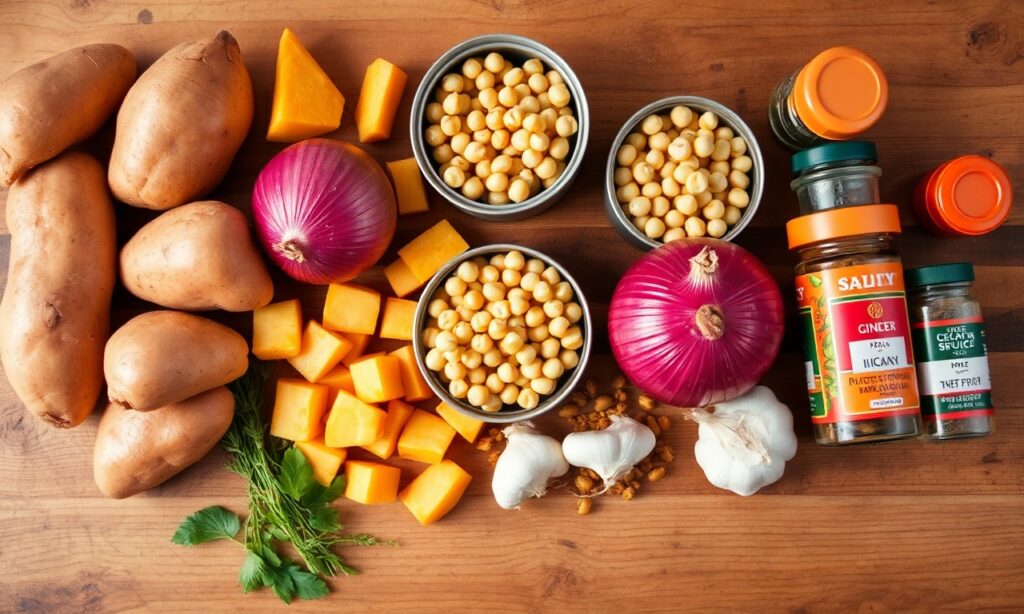
- Sweet Potatoes: Opt for firm, unblemished sweet potatoes. Varieties with vibrant orange flesh, like the Beauregard or Jewel, offer a richer color and sweeter flavor, perfect for this curry. Aim for about 1.5 pounds (approximately 700g) of sweet potatoes, peeled and cut into 1-inch (2.5cm) cubes. This size ensures they cook through to a tender, yielding consistency without disintegrating entirely.
- Chickpeas: Canned chickpeas are a convenient and reliable choice. Ensure they are rinsed and drained thoroughly to remove any residual brine. One 15-ounce (425g) can of chickpeas will suffice. For a more authentic experience or if you have the time, using dried chickpeas, soaked overnight and then cooked until tender, offers a superior texture and taste.
The Aromatic Backbone: Onions, Garlic, and Ginger
These three form the indispensable base of most savory curries, building layers of flavor from the outset.
- Onions: One large yellow or red onion, finely diced, provides a sweet and savory foundation.
- Garlic: 4-6 cloves of garlic, minced, offer pungent depth. Don’t be shy with the garlic; its robust flavor is essential.
- Ginger: A 2-inch (5cm) piece of fresh ginger, grated or finely minced, introduces a warming, zesty note that cuts through the richness of the other ingredients.
The Spice Symphony: Unlocking the Curry’s Soul
This is where the magic truly happens. The right blend of spices transforms simple ingredients into an aromatic masterpiece. For a balanced and complex flavor, we’ll use a combination of ground and whole spices.
- Ground Spices:
- 1 tablespoon curry powder (a good quality blend is key)
- 1 teaspoon ground cumin
- 1 teaspoon ground coriander
- ½ teaspoon ground turmeric
- ½ teaspoon garam masala (added towards the end for freshness)
- ¼ teaspoon cayenne pepper (or to taste for heat)
- Whole Spices (Optional but Recommended):
- 1 cinnamon stick
- 3-4 green cardamom pods, lightly crushed
- 2-3 whole cloves
The Liquid Embrace: Tomatoes and Coconut Milk
These provide the luscious sauce that binds everything together.
- Diced Tomatoes: One 14.5-ounce (411g) can of diced tomatoes, undrained. These add acidity and body to the sauce.
- Coconut Milk: One 13.5-ounce (400ml) can of full-fat coconut milk. This is crucial for creaminess and a subtle tropical sweetness. Avoid light coconut milk, as it won’t provide the same richness.
- Vegetable Broth or Water: ½ cup (120ml), to adjust consistency as needed.
Finishing Touches: Herbs and Acidity
- Fresh Cilantro: A generous handful, chopped, for garnish.
- Lime Juice: The juice of ½ a lime, added at the end, brightens all the flavors.
The Step-by-Step Alchemy: Crafting Your Perfect Curry
This recipe is designed for clarity and ease, allowing you to focus on the nuances of flavor development.
- Sauté the Aromatics: Heat 2 tablespoons of coconut oil or vegetable oil in a large, heavy-bottomed pot or Dutch oven over medium heat. If using whole spices, add the cinnamon stick, cardamom pods, and cloves to the hot oil and toast for about 30 seconds until fragrant. Then, add the finely diced onion and sauté until softened and translucent, about 5-7 minutes. Add the minced garlic and grated ginger and cook for another minute until fragrant, being careful not to burn them.
- Bloom the Spices: Stir in the curry powder, cumin, coriander, turmeric, and cayenne pepper. Cook for 1-2 minutes, stirring constantly, allowing the spices to bloom in the hot oil. This process awakens their aromas and deepens their flavor.
- Incorporate Tomatoes and Simmer: Add the can of diced tomatoes (with their juice) to the pot. Stir well, scraping up any browned bits from the bottom of the pot. Bring the mixture to a gentle simmer and cook for 5 minutes, allowing the tomatoes to break down slightly and meld with the spices.
- Add Sweet Potatoes and Liquids: Stir in the cubed sweet potatoes, rinsed chickpeas, and the full-fat coconut milk. Add ½ cup of vegetable broth or water to achieve your desired consistency. Season generously with salt and pepper. Bring the curry to a gentle simmer, then reduce the heat to low, cover, and let it cook.
- Slow Simmer to Perfection: Simmer the curry for 20-25 minutes, or until the sweet potatoes are fork-tender but not mushy. Stir occasionally to prevent sticking. If the curry becomes too thick, add a little more vegetable broth or water, a quarter cup at a time.
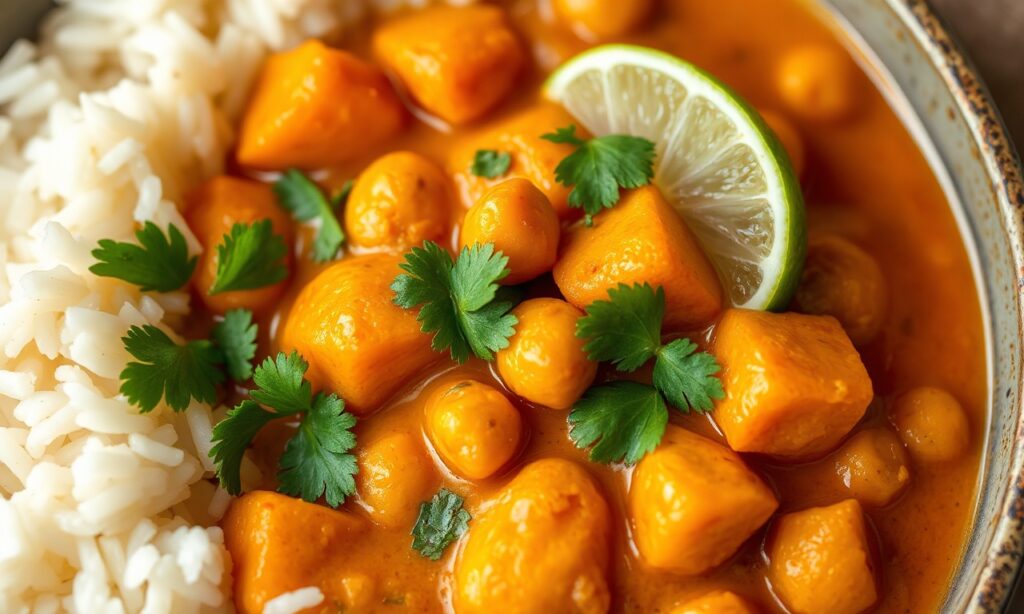
- Finish and Serve: Once the sweet potatoes are tender, stir in the garam masala. This is best added at the end to preserve its aromatic qualities. Squeeze in the fresh lime juice and stir to combine. Taste and adjust seasoning as needed – you might want a pinch more salt or a touch more lime. Garnish generously with freshly chopped cilantro before serving.
Nutritional Insights: Fueling Your Body with Goodness
This Sweet Potato and Chickpea Curry is not only a culinary delight but also a nutritional powerhouse. While exact figures can vary based on specific ingredient brands and portion sizes, a typical serving (approximately 1/6th of the recipe) offers a robust profile of essential nutrients.
- Calories: Approximately 350-450 kcal
- Protein: Around 10-15g (primarily from chickpeas)
- Fiber: Excellent source, typically 8-12g (from sweet potatoes, chickpeas, and spices)
- Vitamins: Rich in Vitamin A (from beta-carotene in sweet potatoes), Vitamin C, and B vitamins.
- Minerals: Good source of potassium, magnesium, and iron.
- Healthy Fats: Provided by coconut milk and cooking oil.
The high fiber content aids digestion and promotes satiety, making this curry a satisfying meal that can support weight management goals. The beta-carotene in sweet potatoes is vital for vision health and immune function, while the protein and complex carbohydrates offer sustained energy release.
Elevating Your Curry: Expert Tips for Restaurant-Quality Results
Even with a straightforward recipe, a few expert touches can elevate your Sweet Potato and Chickpea Curry from a good home-cooked meal to an unforgettable gastronomic experience.
- Toasting Whole Spices: If you have them, toasting whole spices like cardamom pods, cloves, and cinnamon sticks in the hot oil before adding the onions infuses the oil with their essential oils, creating a more nuanced aroma and flavor profile. Lightly crush the cardamom pods to release their seeds.
- Layering Flavors: Don’t be afraid to experiment with additional aromatics. A finely chopped poblano or green bell pepper, sautéed with the onions, can add another layer of vegetal sweetness and a subtle peppery note. A pinch of fenugreek leaves (kasoori methi) added at the end can provide a unique, slightly bitter complexity that many find irresistible.
- The Power of Acidity: The lime juice at the end is non-negotiable. It acts as a flavor enhancer, cutting through the richness of the coconut milk and tying all the disparate flavors together. A small splash of apple cider vinegar can also achieve a similar brightening effect if limes are unavailable.
- Texture Play: For added texture, consider toasting some slivered almonds or cashews and sprinkling them over the finished curry. A dollop of plain, unsweetened yogurt or a swirl of dairy-free alternative can also add a cooling contrast to the spice.
- Spice Level Control: The cayenne pepper is a guideline. If you prefer a milder curry, omit it entirely or use just a tiny pinch. For a spicier dish, increase the cayenne, or add a finely chopped fresh chili pepper (like a serrano or jalapeño) along with the garlic and ginger.
Serving Suggestions: The Perfect Companions
This Sweet Potato and Chickpea Curry is incredibly versatile when it comes to accompaniments.
- Rice: Fluffy basmati rice is the classic pairing, providing a neutral canvas for the vibrant curry. For a healthier option, consider brown rice or quinoa.
- Bread: Warm naan bread, roti, or even a crusty baguette are excellent for scooping up every last drop of the delicious sauce.
- Side Salads: A simple cucumber and tomato salad, or a kachumber salad (finely chopped cucumber, tomato, onion, and cilantro with lemon juice), offers a refreshing contrast.
- Yogurt: A small bowl of plain yogurt or raita (yogurt mixed with cucumber, mint, and spices) can provide a cooling counterpoint to the curry’s warmth.
Frequently Asked Questions
Can I make this curry ahead of time?
Yes, this curry is an excellent candidate for making ahead. In fact, the flavors often deepen and meld beautifully overnight. Store it in an airtight container in the refrigerator for up to 3-4 days. Reheat gently on the stovetop or in the microwave, adding a splash of water or broth if it has thickened too much.
What if I don’t have all the spices?
While a full spice complement yields the best results, you can still make a delicious curry with fewer ingredients. A good quality curry powder, cumin, and turmeric are the most essential. You can omit coriander and cayenne if necessary, but the flavor profile will be less complex. In a pinch, a pre-made curry paste can also be used, though adjust the quantities as these can be more potent.
Can I freeze this curry?
Absolutely. Once cooled, this curry freezes exceptionally well. Portion it into freezer-safe containers or bags. It will keep in the freezer for up to 3 months. Thaw overnight in the refrigerator before reheating. The texture of the sweet potatoes might be slightly softer after freezing and thawing, but the flavor will remain excellent.
What other vegetables can I add to this curry?
This recipe is highly adaptable. Other vegetables that work wonderfully include cauliflower florets, chopped zucchini, spinach (added in the last 5 minutes of cooking), peas, or even cubes of butternut squash. Adjust cooking times based on the vegetable’s density to ensure everything is tender.
Is this curry vegan?
Yes, as written, this recipe is entirely vegan, provided you use coconut oil or vegetable oil for sautéing and omit any dairy-based garnishes. The use of full-fat coconut milk ensures a rich, creamy texture without the need for animal products.
See also: Sweet Potato