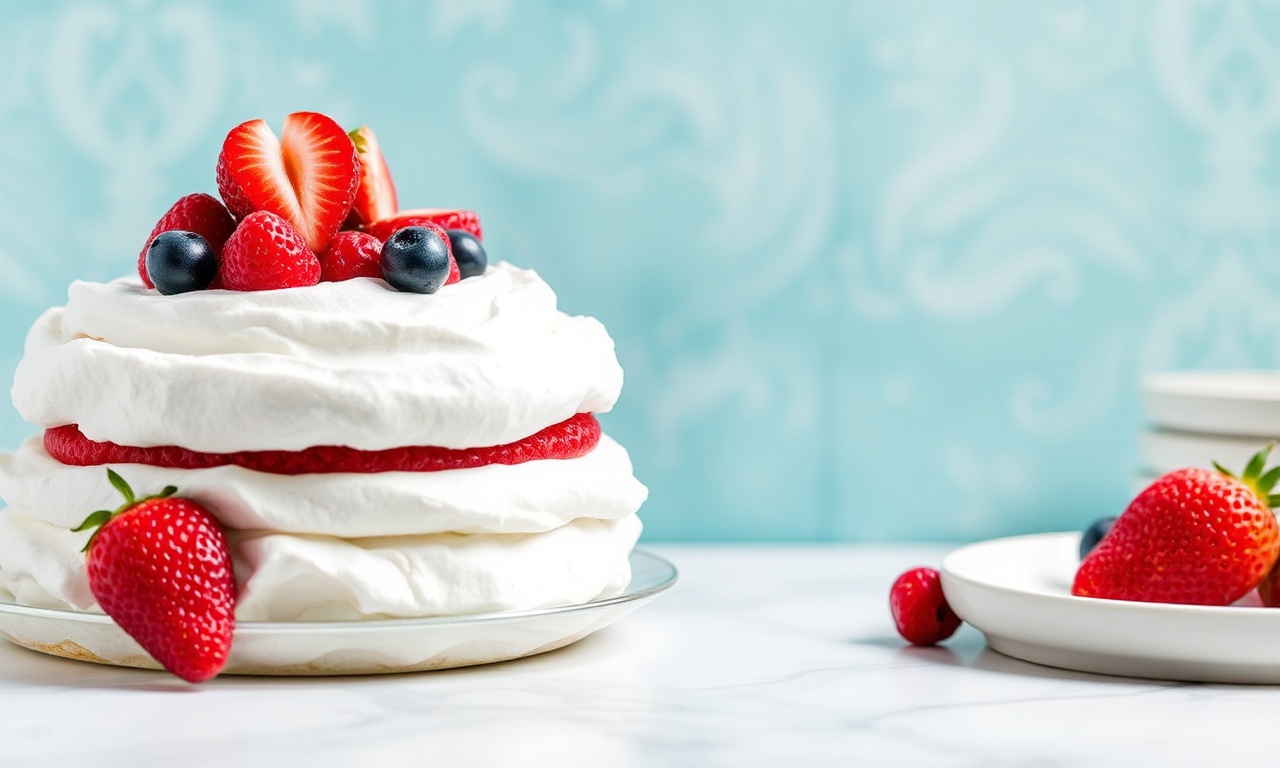

Pavlova: A Cloud of Sweetness, A Legacy of Delight
What truly elevates a dessert from merely enjoyable to utterly unforgettable? Is it the interplay of textures, the delicate balance of sweetness and tartness, or perhaps the sheer visual poetry it presents? For many, the answer lies in the ethereal beauty and exquisite taste of Pavlova, a dessert that has captured hearts and palates across the globe. Its delicate crisp shell, yielding to a soft, marshmallow-like interior, crowned with vibrant fruits and luscious cream, is proof of culinary artistry. But achieving this perfect balance is an art form in itself, often shrouded in mystique. This comprehensive guide demystifies the process, empowering you with the knowledge and techniques to consistently create your own Pavlova masterpiece, worthy of any celebration.
- Pavlova: A Cloud of Sweetness, A Legacy of Delight
- The Anatomy of a Perfect Pavlova: Understanding the Core Components
- Essential Ingredients: The Foundation of Your Meringue Masterpiece
- The Art of the Meringue: Step-by-Step to Perfection
- Troubleshooting Common Pavlova Pitfalls: Expert Solutions
- Elevating Your Pavlova: Pro-Tips for Restaurant-Quality Results
- Nutritional Snapshot: A Sweet Indulgence
- The Cultural Significance of Pavlova
- Frequently Asked Questions about Pavlova
- About Pavlova
The true magic of Pavlova lies not just in its taste, but in the delicate dance between the brittle exterior and the cloud-like interior, a textural symphony that captivates every sense.
This journey into the heart of Pavlova creation begins with understanding its origins, a tale woven with rivalries and admiration. While its exact birthplace is debated, it is widely attributed to either Australia or New Zealand, named in honor of the legendary Russian ballerina Anna Pavlova. Both nations claim its invention, proof of its popularity and the national pride it inspires. This dessert embodies a spirit of sophisticated simplicity, a dessert that looks incredibly complex but, with the right guidance, is surprisingly attainable.
The Anatomy of a Perfect Pavlova: Understanding the Core Components
Before we explore the ‘how,’ it’s crucial to understand the ‘what.’ A Pavlova is fundamentally a meringue-based dessert. However, it’s not just any meringue. It’s a specific type that requires precise handling to achieve its signature characteristics: a deeply browned, crisp outer shell and a chewy, marshmallow-soft interior. This duality is achieved through a careful balance of ingredients and a controlled baking process. The key players are egg whites, sugar, an acid (typically cream of tartar or vinegar), and a stabilizer (cornstarch).
The science behind this is fascinating. Egg whites contain proteins that, when whipped, unfold and trap air, forming a stable foam. Sugar not only sweetens but also stabilizes this foam, preventing the egg whites from collapsing. The acid helps to denature the proteins, making them more pliable and easier to whip into a voluminous structure. Cornstarch, added later in the process, matter significantly in creating that desirable chewy texture in the center by preventing the sugar from crystallizing excessively and absorbing some of the moisture.
Essential Ingredients: The Foundation of Your Meringue Masterpiece
The quality and precise measurement of your ingredients are paramount. Substituting or altering quantities can significantly impact the final outcome. Here’s what you’ll need for a classic Pavlova that serves approximately 8-10 people:
- Egg Whites: 4 large (approximately 120-140g), at room temperature. Room temperature egg whites whip up with more volume than cold ones.
- Granulated Sugar: 250g (about 1 ¼ cups). Fine granulated sugar is preferable as it dissolves more easily.
- Cornstarch: 2 tablespoons (approximately 20g).
- White Vinegar or Cream of Tartar: 1 teaspoon. Vinegar is often preferred for its neutral flavor.
- Vanilla Extract: 1 teaspoon (optional, for added aroma).
- Toppings:
- 300ml (1 ¼ cups) Heavy Cream or Whipping Cream, chilled
- 1-2 tablespoons Powdered Sugar (optional, to sweeten cream)
- Assorted Fresh Fruits: Berries (strawberries, raspberries, blueberries), kiwi, passionfruit, mango, etc.
The type of sugar used can influence the final texture. While granulated sugar is standard, some recipes call for caster sugar, which is finer and dissolves more readily, potentially leading to a smoother meringue. However, for the characteristic chewy center, a slightly coarser granulated sugar can be beneficial.
The Art of the Meringue: Step-by-Step to Perfection
Crafting the perfect Pavlova is a methodical process, requiring patience and attention to detail. Follow these steps meticulously to achieve that enviable crisp shell and yielding interior.
- Preparation is Key: Preheat your oven to 150°C (300°F). Line a baking sheet with parchment paper. You can draw a circle on the parchment paper (approximately 20-23 cm or 8-9 inches in diameter) as a guide for shaping your Pavlova. Flip the parchment paper over so the pencil marks are on the underside, preventing them from transferring to the meringue.
- Whipping the Egg Whites: Ensure your mixing bowl and whisk are scrupulously clean and free of any grease. Even a tiny amount of fat can prevent the egg whites from whipping properly. Place the room-temperature egg whites in the bowl. Begin whipping on a medium speed until soft peaks form. This means the peaks will curl over when the whisk is lifted.
- Gradually Incorporating Sugar: With the mixer still running on medium-high speed, begin adding the granulated sugar, one tablespoon at a time. This gradual addition is crucial. It allows each increment of sugar to dissolve fully into the egg whites before the next is added, preventing a gritty texture. Continue whipping until the meringue is stiff, glossy, and the sugar has completely dissolved. You can test this by rubbing a small amount of meringue between your fingers; it should feel smooth, not gritty.
- Adding Stabilizers and Flavor: Gently fold in the cornstarch, vinegar (or cream of tartar), and vanilla extract (if using) using a spatula. Be careful not to overmix, as this can deflate the meringue. The mixture should remain light and airy.
- Shaping the Pavlova: Spoon the meringue onto the prepared baking sheet, using your drawn circle as a guide. Create a slight well in the center, which will help to hold the cream and fruit later. You can also create decorative swirls or peaks around the edges with your spatula.
- The Gentle Bake: Place the Pavlova in the preheated oven. Immediately reduce the oven temperature to 120°C (250°F). Bake for 1 hour to 1 hour and 15 minutes. The Pavlova should be dry to the touch and a pale golden-brown color. Do not open the oven door during the first hour of baking, as the sudden change in temperature can cause it to collapse.
- Cooling in the Oven: Once baked, turn off the oven but leave the Pavlova inside with the oven door slightly ajar (you can prop it open with a wooden spoon). Allow it to cool completely in the oven. This slow cooling process is vital for preventing cracks and ensuring the meringue dries out properly. This can take several hours or even overnight.
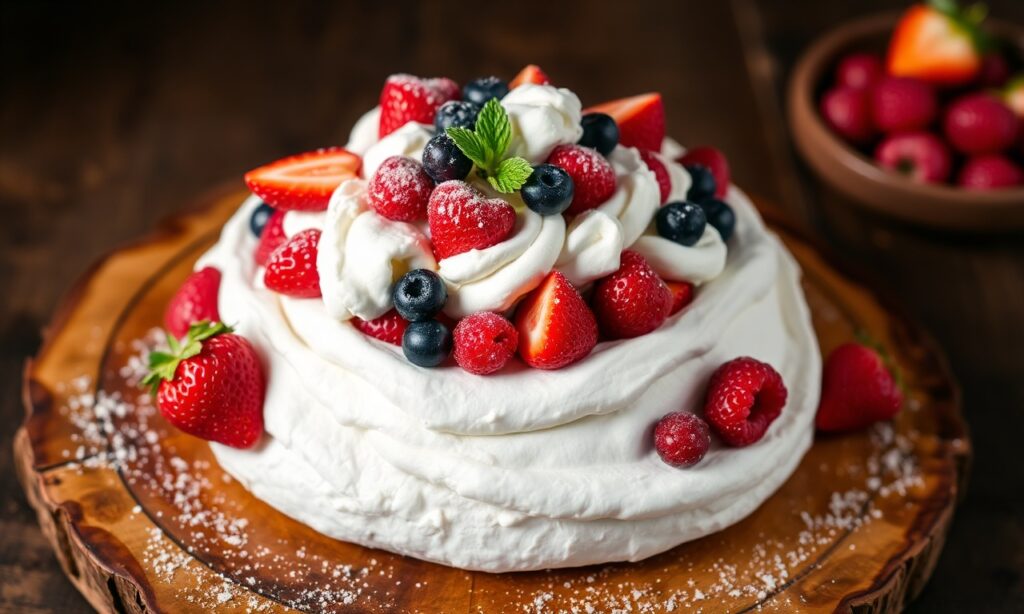
- Assembling Your Masterpiece: Once completely cool, carefully transfer the Pavlova to a serving platter. Whip the chilled heavy cream until soft peaks form. Sweeten with powdered sugar if desired, and add vanilla if you like. Spoon the whipped cream into the center of the Pavlova. Arrange your prepared fresh fruits artfully over the cream.
Troubleshooting Common Pavlova Pitfalls: Expert Solutions
Even with meticulous attention, Pavlova can sometimes present challenges. Understanding these common issues and their solutions can save your dessert from disaster.
One of the most common problems is a cracked Pavlova. While some cracking is inevitable and adds character, excessive cracking often occurs due to opening the oven door too early or cooling the Pavlova too quickly. The slow cooling process inside the turned-off oven is your best defense against this. Another frequent issue is a sticky or undercooked center. This usually indicates that the Pavlova hasn’t baked for long enough or the oven temperature was too high, causing the outside to brown before the inside had a chance to dry. Conversely, an overly dry and brittle Pavlova might have been baked at too low a temperature for too long, or cooled too aggressively.
A collapsed Pavlova is often a result of under-whipped egg whites, too much sugar added too quickly, or being removed from the oven too soon. The structure simply wasn’t strong enough to support itself. Regarding the color, while a pale golden hue is desirable, a pure white Pavlova might indicate underbaking, while a deeply browned one suggests overbaking or too high a temperature.
Elevating Your Pavlova: Pro-Tips for Restaurant-Quality Results
To truly transform your homemade Pavlova into a showstopper, consider these expert insights.
When it comes to fruit toppings, seasonality is your best friend. Utilizing fruits that are in their prime ensures the most vibrant flavors and colors. For a touch of elegance, consider a drizzle of fruit coulis or a sprinkle of toasted nuts like slivered almonds or pistachios for added crunch. Passionfruit pulp, with its intense tropical tang, is a classic and highly recommended topping that beautifully cuts through the sweetness. The contrast between the sweet, airy meringue and the sharp, slightly tart fruit is what makes Pavlova so irresistible.
Research in food science highlights how the precise ratio of sugar to egg white impacts the meringue’s stability and texture. A higher sugar content generally leads to a more stable meringue but can also result in a sweeter, potentially cloying dessert if not balanced with acidic fruits. Studies have found that adding a small amount of cornstarch (around 1-2% of the egg white weight) significantly improved the chewy texture of the meringue center by interfering with sugar crystallization.
Nutritional Snapshot: A Sweet Indulgence
While Pavlova is undoubtedly a celebratory dessert, understanding its nutritional profile can help in mindful enjoyment. A typical serving (approximately 1/8th of the Pavlova, including fruit and cream) contains:
- Calories: 300-450 kcal (varies greatly based on toppings)
- Carbohydrates: 40-60g
- Sugar: 35-55g
- Protein: 3-5g
- Fat: 15-25g (primarily from cream)
Keep in mind that these are estimates. The exact figures will depend on the specific quantities of sugar, cream, and fruits used. Pavlova is best enjoyed as an occasional treat rather than a daily indulgence.
The Cultural Significance of Pavlova
Beyond its culinary appeal, Pavlova holds a special place in the hearts of many, particularly in Australia and New Zealand. It’s a dessert synonymous with summer holidays, Christmas gatherings, and festive occasions. The shared history and friendly rivalry over its origin contribute to its cultural significance, making it more than just a dessert; it’s a symbol of national identity and shared culinary heritage. The act of preparing and sharing a Pavlova is often a communal experience, bringing families and friends together.
Frequently Asked Questions about Pavlova
About Pavlova
Can Pavlova be made ahead of time?
Yes, the meringue shell of a Pavlova can be made a day or two in advance and stored in an airtight container at room temperature. However, it is best assembled with the cream and fruit just before serving to prevent the meringue from becoming soggy.
What is the best way to store leftover Pavlova?
If you have any leftover assembled Pavlova, it’s best to cover it loosely with plastic wrap and refrigerate. It will remain at its best for about 24 hours, though the crispness of the meringue may diminish over time. Unassembled meringue shells can be stored in an airtight container at room temperature for up to a week.
Why did my Pavlova crack?
Cracking is a common characteristic of Pavlova, often adding to its rustic charm. However, excessive cracking can occur due to rapid temperature changes, such as opening the oven door too early or cooling the meringue too quickly. Ensure it cools slowly in the turned-off oven with the door ajar.
What is the difference between Pavlova and Meringue Kisses?
While both are made from whipped egg whites and sugar, Pavlova is characterized by its large, disc-like shape with a crisp exterior and chewy interior, often baked at a lower temperature for a longer time. Meringue kisses are typically smaller, piped meringues that are baked until completely dry and crisp throughout.
Can I make Pavlova without cornstarch?
While cornstarch is essential for achieving the signature chewy center of a Pavlova, some recipes might omit it for a fully crisp meringue. However, without cornstarch, you will likely end up with a texture closer to a standard baked meringue, lacking that characteristic soft, marshmallow-like interior.
See also: Pavlova