
The Allure of the Weeknight Meal: Beyond Convenience
The end of a long workday often brings with it a familiar dilemma: what to put on the table that is both nourishing and appealing, without demanding hours of kitchen time? For many, the weeknight meal is a battleground between hunger and exhaustion, a constant negotiation between the desire for something satisfying and the sheer lack of energy to create it. We’ve all been there, staring blankly into the refrigerator, the specter of takeout looming large. Yet, there exists a category of dishes that transcend this struggle, offering a beacon of culinary hope: the weeknight winner. These are meals that are not merely quick, but fundamentally *smart* – designed to deliver maximum flavor and nutritional value with minimal fuss. They are the dishes that become reliable staples, the ones you can whip up on autopilot, knowing they will consistently delight.
- The Allure of the Weeknight Meal: Beyond Convenience
- The Culinary Foundation: Why Coconut Chicken Works
- The Essential Components of a Perfect Coconut Chicken Rice Bowl
- The Star: Chicken
- The Creamy Dream: Coconut Milk
- The Flavor Foundation: Aromatics and Spices
- The Supporting Cast: Vegetables and Rice
- The Proven Recipe: Mastering Your Coconut Chicken Rice Bowl
- Nutritional Snapshot: A Wholesome Choice
- Elevating Your Coconut Chicken: Pro-Tips for Restaurant Quality
- The Enduring Appeal: Why It’s a Weeknight Champion
- Frequently Asked Questions
The true genius of a weeknight winner lies not just in its speed, but in its ability to deliver complex, satisfying flavors that feel like a deliberate choice, not a last resort.
This is where the humble yet magnificent coconut chicken rice bowl enters the arena. It’s a dish that, when executed with a few key principles, transforms from a simple meal into a culinary triumph. It’s a symphony of textures and tastes – creamy coconut milk, tender chicken, fragrant rice, and a medley of vibrant vegetables – all harmonizing to create a dish that is both comforting and exciting. Its adaptability is another key factor in its enduring appeal; it can be customized to suit nearly any palate or dietary preference, making it a universally loved option. This article will explore why this seemingly simple dish holds such a powerful place in the hearts (and stomachs) of busy home cooks, examining its culinary DNA, offering a foolproof method for preparation, and uncovering the secrets that elevate it from good to absolutely unforgettable.
The Culinary Foundation: Why Coconut Chicken Works
The magic of coconut chicken rice bowls is deeply rooted in fundamental culinary principles that appeal to both our primal cravings and our sophisticated palates. At its core, the dish leverages the incredible flavor-infusing power of coconut milk. This creamy, slightly sweet liquid acts as a luxurious base, tenderizing the chicken and carrying aromatics deep into the meat. Unlike water-based broths, coconut milk provides a rich mouthfeel and a subtle tropical sweetness that complements a wide array of spices and seasonings. This inherent richness means you don’t need to spend hours developing complex flavor profiles; the coconut milk does a significant portion of the heavy lifting.
Furthermore, the combination of chicken and rice is a universally beloved pairing, proof of its satisfying nature. Chicken, particularly when cooked in a flavorful sauce, offers lean protein that keeps you feeling full and energized. Rice, as a carbohydrate staple, provides the necessary energy to fuel our busy lives. When these two elements are brought together in a coconut-based sauce, they create a synergistic effect. The rice absorbs the delicious sauce, becoming a vehicle for flavor, while the chicken provides a hearty, protein-rich counterpoint. This fundamental balance of protein, carbohydrate, and fat, enhanced by the decadent texture of coconut milk, is a cornerstone of satisfying and sustaining meals.
Research consistently highlights the role of fat in satiety, and the healthy fats found in coconut milk contribute significantly to the feeling of fullness and contentment after eating this dish. Studies have noted that medium-chain triglycerides (MCTs), abundant in coconut oil and milk, are metabolized differently and can contribute to increased feelings of fullness.
The simplicity of the preparation also matter significantly. Many variations of coconut chicken can be made in a single pot or skillet, minimizing cleanup and maximizing efficiency. This is paramount for weeknight cooking where time is a precious commodity. The ability to achieve such depth of flavor and a restaurant-quality texture with minimal effort is what truly elevates this dish. It’s proof of how well-chosen ingredients and a smart approach to cooking can yield extraordinary results without demanding extraordinary effort.
The Essential Components of a Perfect Coconut Chicken Rice Bowl
Crafting the ultimate coconut chicken rice bowl is an exercise in thoughtful ingredient selection and precise technique. While variations abound, a few core components form the bedrock of this crowd-pleasing dish.
The Star: Chicken
The choice of chicken is paramount. Boneless, skinless chicken thighs are often preferred for their superior flavor and ability to remain moist and tender even when cooked through. Their higher fat content allows them to absorb marinades and sauces more effectively, resulting in a more succulent final product. Chicken breast can also be used, but it requires more careful cooking to prevent it from becoming dry and tough. Slicing the chicken into uniform, bite-sized pieces ensures even cooking and makes it easy to incorporate into the rice and sauce.
The Creamy Dream: Coconut Milk
Full-fat canned coconut milk is non-negotiable for achieving the characteristic richness and creamy texture. Light coconut milk or coconut beverages simply won’t provide the same luxurious mouthfeel or depth of flavor. Opt for brands known for their quality, as some can be watery or have an off-putting flavor. Shaking the can well before opening is essential to reincorporate the separated cream.
The Flavor Foundation: Aromatics and Spices
This is where the personality of your coconut chicken bowl truly shines. A robust base of aromatics like minced garlic, grated fresh ginger, and finely chopped onions or shallots forms the initial flavor layer. These are typically sautéed until fragrant before the other ingredients are added, releasing their essential oils and creating a complex aromatic profile. The spice blend can be tailored to your preference, but common additions include:
- Curry Powder: A convenient blend that offers a warm, complex flavor.
- Turmeric: For vibrant color and earthy notes.
- Cumin: Adds warmth and a slightly smoky depth.
- Coriander: Offers a citrusy, slightly sweet aroma.
- Chili Flakes or Fresh Chilies: For a touch of heat that can be adjusted to taste.
- Optional Enhancers: A pinch of cinnamon, a bay leaf, or a star anise can add subtle layers of complexity.
The Supporting Cast: Vegetables and Rice
A variety of vegetables can be incorporated to add color, texture, and nutrients. Bell peppers (in various colors), broccoli florets, snap peas, carrots, and spinach are all excellent choices. They should be added at appropriate times during the cooking process to ensure they are tender-crisp, not mushy.
The rice serves as the perfect canvas for the flavorful chicken and sauce. Jasmine or basmati rice are ideal choices for their fragrant aroma and fluffy texture. Cooking the rice separately ensures control over its consistency and allows it to absorb the sauce beautifully when served.
The Proven Recipe: Mastering Your Coconut Chicken Rice Bowl
This recipe is designed for ease and maximum flavor, perfect for a busy weeknight. It prioritizes a single-pan approach where possible, minimizing cleanup.
Yields: 4 servings
Prep time: 15 minutes
Cook time: 25-30 minutes
Ingredients:
- 1.5 lbs boneless, skinless chicken thighs, cut into 1-inch pieces
- 1 tablespoon olive oil or coconut oil
- 1 large onion, finely chopped
- 3 cloves garlic, minced
- 1 tablespoon fresh ginger, grated
- 1.5 tablespoons curry powder (adjust to taste)
- 1 teaspoon ground turmeric
- ½ teaspoon ground cumin
- ¼ teaspoon cayenne pepper (optional, for heat)
- 1 can (13.5 oz) full-fat coconut milk
- ½ cup chicken broth or water
- 1 tablespoon soy sauce or tamari
- 1 teaspoon brown sugar or honey (optional, to balance flavors)
- 1 cup mixed vegetables (e.g., broccoli florets, sliced bell peppers, snap peas)
- Salt and freshly ground black pepper to taste
- Cooked jasmine or basmati rice, for serving
- Fresh cilantro, chopped, for garnish
- Lime wedges, for serving
Preparation Method:
1. Prepare the Chicken: Pat the chicken pieces dry with paper towels. Season generously with salt and freshly ground black pepper. This step is crucial for developing flavor right from the start. 2. Sauté Aromatics: Heat the olive oil or coconut oil in a large skillet or Dutch oven over medium-high heat. Add the chopped onion and cook until softened and translucent, about 5-7 minutes. Add the minced garlic and grated ginger, and cook for another minute until fragrant, being careful not to burn the garlic. 3. Toast Spices: Add the curry powder, turmeric, cumin, and cayenne pepper (if using) to the skillet. Stir and cook for about 30-60 seconds, until the spices are fragrant. This “blooms” the spices, intensifying their flavor. 4. Sear the Chicken: Add the seasoned chicken pieces to the skillet. Cook, stirring occasionally, until the chicken is browned on all sides.
It doesn’t need to be cooked through at this stage. 5. Build the Sauce: Pour in the full-fat coconut milk and chicken broth (or water). Add the soy sauce or tamari and brown sugar or honey (if using). Stir everything together, scraping up any browned bits from the bottom of the pan. 6. Simmer and Thicken: Bring the mixture to a gentle simmer. Reduce the heat to medium-low, cover, and let it simmer for 10-15 minutes, or until the chicken is cooked through and the sauce has thickened slightly. Stir occasionally to prevent sticking. 7. Add Vegetables: Stir in the mixed vegetables. Cook for another 5-7 minutes, or until the vegetables are tender-crisp. 8. Adjust Seasoning: Taste the sauce and adjust seasoning with salt, pepper, or more soy sauce as needed. If the sauce is too thick, add a splash more chicken broth or water.
If it’s too thin, let it simmer uncovered for a few more minutes.
Serving:
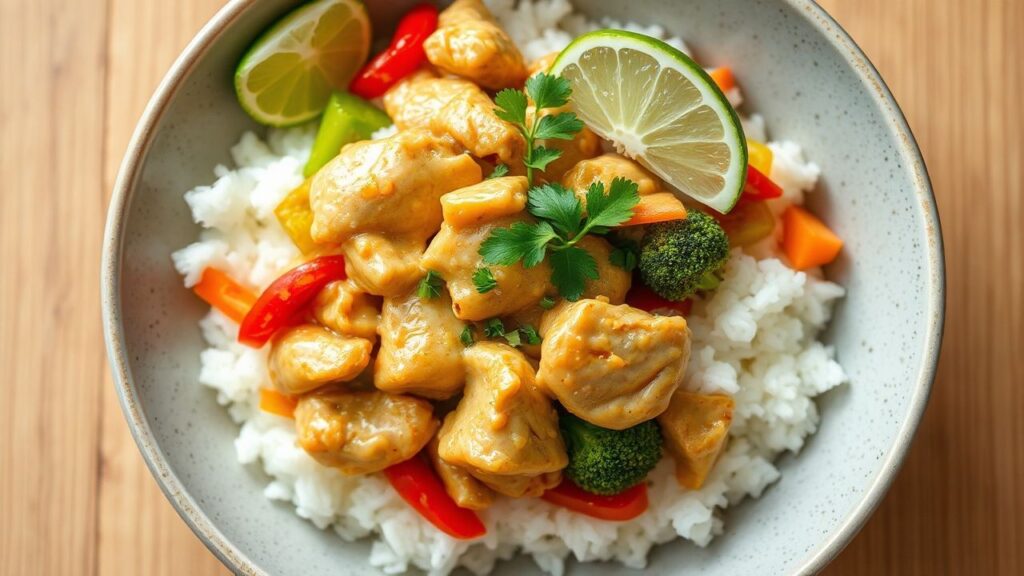
Serve the coconut chicken mixture hot over bowls of fluffy cooked rice. Garnish generously with fresh chopped cilantro and serve with lime wedges on the side for a burst of freshness.
Nutritional Snapshot: A Wholesome Choice
While indulgence is a key appeal of coconut chicken rice bowls, they can also be surprisingly nutritious. The exact nutritional profile will vary based on ingredients and portion sizes, but here’s a general breakdown per serving (assuming 4 servings):
- Calories: Approximately 500-650 kcal (depending on fat content of coconut milk and portion size of rice)
- Protein: 30-40g (primarily from chicken)
- Fat: 25-40g (largely from coconut milk, including beneficial MCTs)
- Carbohydrates: 30-50g (from rice and vegetables)
- Fiber: 3-6g (from vegetables and whole grains if using brown rice)
- Vitamins and Minerals: Rich in Vitamin B complex, selenium (from chicken), Vitamin C (from bell peppers), and various minerals from spices and vegetables.
Keep in mind that while coconut milk contributes healthy fats, it is also calorie-dense. Portion control, especially with the rice, can help manage calorie intake. Incorporating a variety of colorful vegetables significantly boosts the fiber and micronutrient content, making the dish more balanced and satiating.
Elevating Your Coconut Chicken: Pro-Tips for Restaurant Quality
Achieving a truly exceptional coconut chicken rice bowl goes beyond simply following a recipe. A few expert touches can transform a good dish into a memorable culinary experience.
Flavor Depth with Aromatics: Don’t rush the sautéing of onions, garlic, and ginger. Allowing them to soften and become fragrant over medium heat releases their full aromatic potential, forming a more complex flavor base for the sauce. Similarly, toasting the dry spices for a minute until fragrant before adding liquids intensifies their flavor.
Embrace the Umami: A dash of fish sauce, a teaspoon of oyster sauce, or even a spoonful of miso paste can add a profound layer of savory umami that complements the creamy coconut and tender chicken beautifully. These additions are subtle but impactful.
The Power of Acidity: A squeeze of fresh lime juice just before serving is transformative. The bright, zesty acidity cuts through the richness of the coconut milk, balancing the flavors and making the dish taste fresher and more vibrant. It’s a simple step that makes a significant difference.
Texture is Key: While tender-crisp vegetables are delicious, consider adding some textural contrast. Toasted cashews or peanuts sprinkled on top offer a delightful crunch. Crispy fried shallots or garlic chips can also provide an addictive textural element and concentrated flavor.
A Touch of Heat Control: If you enjoy a little spice, consider adding a finely chopped fresh chili (like a Thai bird’s eye chili) along with the garlic and ginger. This infuses a fresh heat into the sauce. Alternatively, a swirl of sriracha or chili garlic sauce at the table allows individuals to customize their spice level.
The Enduring Appeal: Why It’s a Weeknight Champion
The coconut chicken rice bowl is more than just a meal; it’s a culinary solution. It addresses the perennial weeknight challenge with elegance and flavor. Its inherent adaptability means it can be tweaked to suit virtually any preference, from mild and creamy to spicy and vibrant. The combination of tender chicken, fragrant rice, and a luscious coconut sauce is universally appealing, offering comfort and satisfaction in every bite.
Its ability to be prepared relatively quickly, often in one pan, minimizes kitchen chaos and cleanup, a godsend for busy evenings. The nutritional benefits, particularly when packed with vegetables, make it a wholesome choice that fuels the body without leaving you feeling heavy or sluggish. This dish embodies the essence of smart cooking: maximizing flavor and satisfaction with efficient techniques and well-chosen ingredients. It’s proof of the fact that truly delicious and rewarding meals don’t have to be complicated or time-consuming. It’s a dish that earns its title as a weeknight champion, consistently delivering on taste, convenience, and wholesomeness.
Frequently Asked Questions
What is the best type of coconut milk to use for this recipe?
For the richest and creamiest texture, always opt for full-fat canned coconut milk. Avoid “light” versions or coconut beverages, as they will result in a thinner sauce with less flavor. Ensure the can is well-shaken before opening to incorporate the cream that may have separated.
Can I make coconut chicken rice bowls ahead of time?
Yes, you can prepare the coconut chicken mixture ahead of time and refrigerate it for up to 2-3 days. Reheat gently on the stovetop, adding a splash of broth or water if the sauce has thickened too much. Cook the rice fresh for the best texture, or reheat it separately. Adding fresh herbs and a squeeze of lime just before serving will brighten the flavors.
How can I make this dish spicier?
To increase the heat, you can add more cayenne pepper or chili flakes to the spice blend. Alternatively, finely chop a fresh chili (like a serrano or Thai bird’s eye chili) and sauté it with the garlic and ginger. A drizzle of sriracha or your favorite hot sauce over the finished bowl is also an excellent way to add personalized heat.
What are some good vegetarian or vegan alternatives?
For a vegetarian version, substitute the chicken with firm or extra-firm tofu (pressed and cubed) or tempeh. For a vegan dish, ensure you use vegetable broth instead of chicken broth and consider adding a protein source like chickpeas or lentils for heartiness. The cooking method remains largely the same.
Can I use chicken breast instead of thighs?
Yes, you can use chicken breast, but be mindful of cooking times. Chicken breast cooks faster and can become dry if overcooked. Cut the breast into bite-sized pieces and add them to the pan after the aromatics. Cook until just browned on the outside and then proceed with the sauce. Avoid simmering for as long as you would with thighs to prevent dryness.
See also: coconut chicken